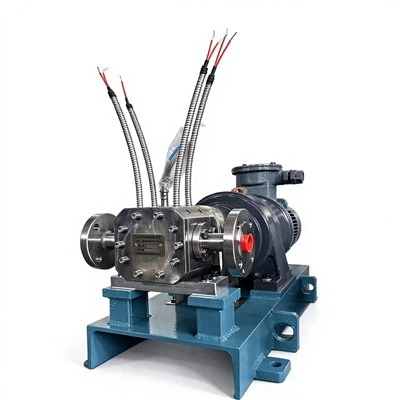
Hey there! As a supplier of gear pump prices, I've been in the industry long enough to know that wear resistance is a big deal when it comes to gear pumps. It's not just some technical jargon; it has a real impact on the price of these pumps. So, let's dive into how the wear resistance of a gear pump affects its price.
First off, what exactly is wear resistance? Well, in simple terms, it's the ability of a gear pump to withstand the wear and tear that comes with regular use. You see, gear pumps work by using gears to move fluid from one place to another. As the gears rotate, they rub against each other and the pump housing, which can cause wear over time. A pump with high wear resistance can handle this friction and abrasion better, lasting longer and performing more consistently.
Now, let's talk about why wear resistance matters so much. When a gear pump has good wear resistance, it means less maintenance and fewer replacements. Think about it. If you have a pump that wears out quickly, you'll have to keep buying new parts or even a whole new pump. That can get expensive really fast. On the other hand, a pump with high wear resistance will save you money in the long run because it won't need to be replaced as often.
So, how does this translate into the price of the pump? Well, manufacturers have to use high - quality materials and advanced manufacturing processes to make a gear pump with good wear resistance. For example, they might use special alloys or coatings on the gears and the pump housing. These materials are more expensive than the standard ones, which means the cost of production goes up. And as you might expect, that increase in production cost is passed on to the customer in the form of a higher price.
Let's take a closer look at the materials. Some of the common materials used to improve wear resistance include stainless steel, ceramics, and hardened alloys. Stainless steel is known for its corrosion resistance, which also helps in reducing wear. Ceramics are extremely hard and can withstand high levels of abrasion. Hardened alloys, on the other hand, are treated to increase their hardness and durability. All of these materials are more costly than the basic metals used in standard gear pumps.
In addition to the materials, the manufacturing process also plays a crucial role. To ensure high wear resistance, manufacturers need to use precise machining techniques. This means using state - of - the - art equipment and highly skilled workers. Precision machining ensures that the gears fit together perfectly, reducing friction and wear. But again, this precision comes at a cost. The investment in equipment and the cost of skilled labor all contribute to the final price of the pump.
Another factor to consider is the testing. A gear pump with high wear resistance needs to be thoroughly tested to make sure it meets the required standards. Manufacturers will run the pump under various conditions to simulate real - world use and measure its wear rate. This testing process is time - consuming and expensive, and it's another reason why wear - resistant pumps are more costly.
Now, you might be wondering if it's really worth paying more for a wear - resistant gear pump. The answer depends on your specific needs. If you're using the pump in a critical application where downtime is not an option, then a high - quality, wear - resistant pump is definitely worth the investment. For example, in industries like oil and gas, chemical processing, or food and beverage, a pump failure can lead to significant losses. In these cases, the extra cost of a wear - resistant pump is a small price to pay for the reliability and long - term savings.
On the other hand, if you have a less demanding application where the pump is not used continuously or where a short downtime is acceptable, you might be able to get away with a less expensive, standard gear pump. But keep in mind that you'll likely have to deal with more frequent maintenance and replacements.
Let's also talk about some of the different types of gear pumps and how wear resistance affects their prices. For instance, Positive Displacement Pumps Similar With Viking Pump are known for their efficiency and reliability. When these pumps are designed with high wear resistance, the price will be higher due to the reasons we've discussed above. The same goes for Production Metering Pump and Magnetic Drive Metering Pump. These pumps often have specific requirements for accuracy and durability, and a wear - resistant design is essential for meeting those requirements.
In conclusion, the wear resistance of a gear pump has a significant impact on its price. High - wear - resistant pumps are more expensive because of the high - quality materials, advanced manufacturing processes, and thorough testing involved. But they also offer long - term savings in terms of reduced maintenance and fewer replacements. If you're in the market for a gear pump, it's important to carefully consider your needs and budget. Do you need a pump that can handle heavy - duty use and last for a long time? Or is a more basic pump sufficient for your application?
If you're interested in learning more about our gear pumps and getting a price quote, we'd love to hear from you. Whether you're looking for a high - wear - resistant pump for a critical application or a more budget - friendly option, we have a wide range of products to meet your needs. Just reach out to us, and our team of experts will be happy to assist you in finding the perfect gear pump for your requirements.


References
- General knowledge of gear pump manufacturing and industry trends.
- Discussions with colleagues in the gear pump manufacturing and sales field.