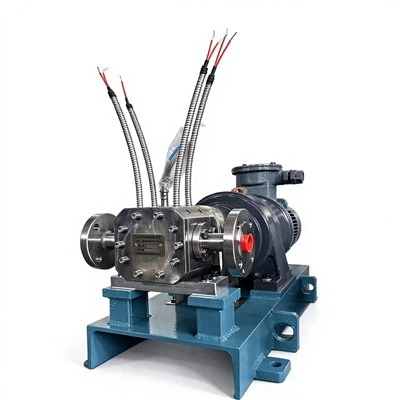
When it comes to asphalt gear pumps, one often overlooked yet crucial factor is their weight. As a leading supplier of asphalt gear pumps, I've witnessed firsthand how the weight of these pumps can significantly impact both their installation and use. In this blog post, I'll delve into the various ways in which the weight of an asphalt gear pump plays a role in these aspects, and why it's essential to consider this factor when making a purchasing decision.
Impact on Installation
Structural Requirements
The weight of an asphalt gear pump directly influences the structural requirements for its installation. Heavier pumps require more robust support structures to ensure stability and prevent any potential damage during operation. For instance, a large - scale asphalt gear pump with a substantial weight may need to be installed on a reinforced concrete base or a heavy - duty steel frame. This not only adds to the installation cost but also requires careful planning and engineering to ensure that the support structure can withstand the pump's weight and the dynamic forces generated during its operation.
On the other hand, lighter asphalt gear pumps offer more flexibility in terms of installation. They can be mounted on less substantial support structures, such as lightweight steel brackets or even directly on existing equipment in some cases. This can significantly reduce the installation time and cost, making them a more attractive option for smaller projects or applications where space and budget are limited.
Handling and Positioning
The weight of the pump also affects the ease of handling and positioning during installation. Heavier pumps are more difficult to move and position accurately. Specialized lifting equipment, such as cranes or forklifts, may be required to lift and place the pump in the desired location. This not only requires additional resources but also increases the risk of accidents during the installation process.


Lighter pumps, in contrast, can be more easily handled by a small team of workers without the need for heavy - duty lifting equipment. This simplifies the installation process and reduces the potential for injuries and damage to the pump. For example, our Customized Oil Steam Heat System Gear Metering Pump With Magnetic Seal is designed with a relatively lightweight construction, making it easier to install in various settings.
Alignment
Proper alignment is crucial for the efficient and reliable operation of an asphalt gear pump. The weight of the pump can affect its ability to maintain proper alignment during installation and operation. Heavier pumps are more likely to cause misalignment due to the gravitational forces acting on them. This can lead to increased wear and tear on the pump's components, reduced efficiency, and even premature failure.
Lighter pumps are less prone to alignment issues as they exert less force on the mounting surfaces. They can be more easily adjusted and aligned, ensuring optimal performance and longer service life. Our 108cc/rev Electric Heating Gear Pump is engineered to be lightweight while still maintaining high performance, which helps in achieving and maintaining proper alignment.
Impact on Use
Energy Consumption
The weight of an asphalt gear pump can have a significant impact on its energy consumption. Heavier pumps require more energy to operate, as the motor has to work harder to overcome the inertia and friction associated with the pump's weight. This can result in higher operating costs over the life of the pump.
Lighter pumps, however, require less energy to operate. They have lower inertia and friction, allowing the motor to run more efficiently. This not only reduces energy consumption but also helps to lower the overall cost of ownership. For example, our E Series Asphalt Heat Preservation Pump is designed with a lightweight yet durable construction, which contributes to its energy - efficient operation.
Mobility and Portability
In some applications, the mobility and portability of the asphalt gear pump are important considerations. Heavier pumps are less mobile and more difficult to transport from one location to another. This can be a significant drawback for applications where the pump needs to be moved frequently, such as in road construction projects or mobile asphalt mixing plants.
Lighter pumps offer better mobility and portability. They can be easily transported on trucks or trailers and quickly set up at different job sites. This makes them more suitable for applications that require flexibility and mobility.
Maintenance and Serviceability
The weight of the pump also affects its maintenance and serviceability. Heavier pumps are more difficult to disassemble and reassemble for maintenance and repair. Specialized tools and equipment may be required to lift and support the pump during these operations, which can increase the maintenance time and cost.
Lighter pumps are easier to handle during maintenance. They can be more quickly disassembled and reassembled, reducing the downtime and cost associated with maintenance. This is particularly important for applications where continuous operation is critical, as it minimizes the impact of maintenance on production.
Conclusion
In conclusion, the weight of an asphalt gear pump has a profound impact on both its installation and use. Heavier pumps may offer certain advantages in terms of durability and performance in some high - demand applications, but they also come with higher installation and operating costs, as well as challenges in handling and maintenance. Lighter pumps, on the other hand, provide more flexibility, lower energy consumption, and easier maintenance, making them a more attractive option for many applications.
As a supplier of asphalt gear pumps, we understand the importance of considering the weight factor when choosing the right pump for your needs. We offer a wide range of pumps with different weights and specifications to meet the diverse requirements of our customers. Whether you need a heavy - duty pump for large - scale industrial applications or a lightweight pump for mobile and small - scale projects, we have the solution for you.
If you're interested in learning more about our asphalt gear pumps or would like to discuss your specific requirements, please feel free to contact us. Our team of experts is ready to assist you in making the right choice for your project.
References
- ASME Boiler and Pressure Vessel Code, Section VIII, Division 1.
- API Standard 610, Centrifugal Pumps for Petroleum, Petrochemical and Natural Gas Industries.
- Hydraulic Institute Standards for Rotodynamic Pumps.