

Hey there! As a supplier of Asphalt Gear Pumps, I've seen firsthand how important it is to keep those gears in top - notch condition. Gears are the heart of an Asphalt Gear Pump, and excessive wear can lead to all sorts of problems, like reduced efficiency, leaks, and even complete pump failure. So, in this blog, I'm gonna share some tips on how to reduce the wear of gears in an Asphalt Gear Pump.
1. Proper Lubrication
Lubrication is key when it comes to reducing gear wear. In an Asphalt Gear Pump, the gears are constantly in contact with each other and the asphalt. Without proper lubrication, the friction between the gears can cause significant wear over time.
First off, you need to choose the right lubricant. The lubricant should have good viscosity at the operating temperature of the pump. If the viscosity is too low, it won't provide enough protection between the gear teeth. On the other hand, if it's too high, it can cause the pump to work harder, leading to increased energy consumption.
Regularly check the lubricant level in the pump. Low lubricant levels can expose the gears to more friction. Also, make sure to change the lubricant at the recommended intervals. Over time, the lubricant can break down and lose its effectiveness, and it may also pick up contaminants that can damage the gears.
2. Correct Installation
Getting the installation right is crucial. If the gears are not installed correctly, they won't mesh properly, which can cause uneven wear. When installing the Asphalt Gear Pump, make sure to follow the manufacturer's instructions carefully.
Check the alignment of the shafts. Misaligned shafts can put extra stress on the gears, leading to premature wear. Use alignment tools to ensure that the shafts are perfectly aligned. Also, pay attention to the mounting of the pump. It should be securely mounted to prevent any vibrations that could cause the gears to wear unevenly.
3. Contaminant Control
Contaminants in the asphalt can be a major cause of gear wear. Things like dirt, sand, and metal particles can act like abrasives, wearing down the gear teeth.
Install a good filtration system. A filter can trap contaminants before they reach the pump, protecting the gears. Make sure to clean or replace the filter regularly to keep it working effectively.
Keep the storage and handling of asphalt clean. Contaminants can enter the asphalt during storage or transfer. Use clean containers and pipes, and avoid exposing the asphalt to dusty or dirty environments.
4. Temperature Management
Asphalt has a high viscosity, and the pump needs to work at a suitable temperature to ensure smooth operation. If the temperature is too low, the asphalt will be too thick, and the gears will have to work harder, increasing wear. If the temperature is too high, it can cause the lubricant to break down and also affect the mechanical properties of the gears.
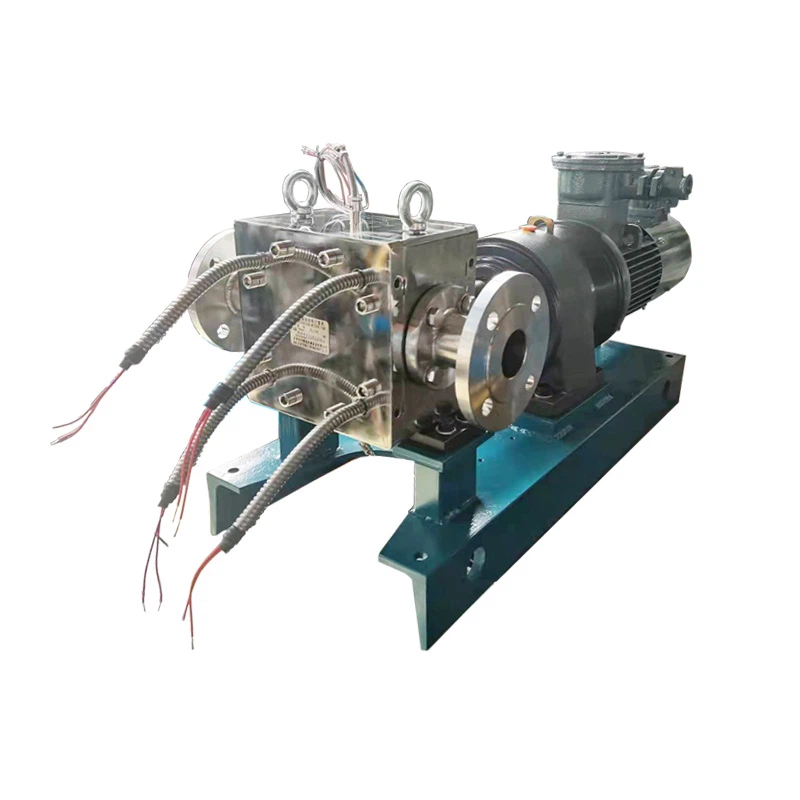

Use a Heat Preservation Gear Metering Pump to maintain the right temperature of the asphalt. These pumps are designed to keep the asphalt at an optimal temperature, reducing the stress on the gears.
Another option is an Electric Heater Preservation Pump. It uses an electric heater to control the temperature of the asphalt, ensuring that the pump operates under the best conditions.
5. Regular Maintenance and Inspection
Regular maintenance is a must - do. Inspect the gears regularly for signs of wear, such as pitting, scoring, or uneven tooth profiles. Early detection of wear can allow you to take corrective action before the problem gets worse.
During maintenance, clean the gears thoroughly to remove any asphalt residue and contaminants. You can also check the clearances between the gears. If the clearances are too large, it can indicate excessive wear, and the gears may need to be replaced.
6. Material Selection
The material of the gears can also have a big impact on wear resistance. Choose gears made from high - quality materials that are suitable for use with asphalt. Some materials are more resistant to wear and corrosion than others.
For example, gears made from hardened steel can offer better wear resistance compared to regular steel. The heat - treatment process can increase the hardness of the steel, making it more durable against the abrasive action of the asphalt.
7. Operating Conditions
Be careful about how you operate the pump. Avoid overloading the pump. Running the pump at a higher capacity than it's designed for can put excessive stress on the gears, leading to accelerated wear.
Also, don't start and stop the pump too frequently. Each start - stop cycle can cause a shock to the gears, and repeated shocks can contribute to wear. Try to keep the pump running at a steady state as much as possible.
8. Upgrade to a Better Pump Design
If you're still having problems with gear wear, it might be worth considering upgrading to a better - designed Asphalt Gear Pump. Some pumps are designed with features that reduce gear wear, such as improved gear profiles and better lubrication systems.
An Insulated Jacket Pump can be a great option. The insulated jacket helps to maintain the temperature of the asphalt, reducing the stress on the gears and improving overall pump performance.
In conclusion, reducing the wear of gears in an Asphalt Gear Pump requires a combination of proper lubrication, correct installation, contaminant control, temperature management, regular maintenance, and careful operation. By following these tips, you can extend the lifespan of your pump and save money on repairs and replacements.
If you're interested in learning more about our Asphalt Gear Pumps or have any questions about reducing gear wear, feel free to reach out to us for a procurement discussion. We're here to help you get the most out of your pump.
References
- "Pump Handbook" by Igor J. Karassik et al.
- "Gear Design and Application" by Dudley Darle W.





