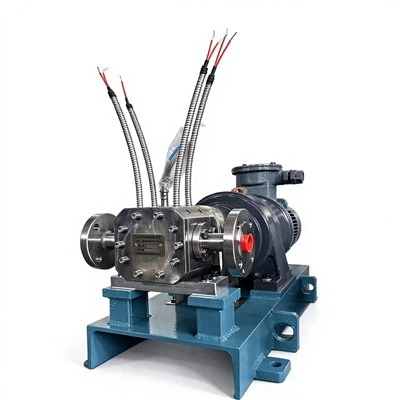
Hey there! As a supplier of CAM Rotor Pumps, I often get asked if these pumps can be used in a corrosive environment. It's a valid question, especially considering the harsh conditions that many industrial settings present. So, let's dive right into it and explore whether a CAM Rotor Pump is up to the task.
First off, let's understand what a CAM Rotor Pump is. It's a type of positive displacement pump that uses rotating cams to move fluid through the pump. These pumps are known for their efficiency, reliability, and ability to handle a wide range of viscosities. They're used in various industries, from food and beverage to chemical processing.
Now, when it comes to corrosive environments, things get a bit tricky. Corrosion is the deterioration of a material due to a chemical reaction with its environment. In industrial settings, this can be caused by acids, bases, salts, and other chemicals. So, can a CAM Rotor Pump withstand these corrosive elements?
The answer is: it depends. It all boils down to the materials used in the construction of the pump. Most CAM Rotor Pumps are made from metals like stainless steel, cast iron, or aluminum. These materials have different levels of resistance to corrosion.
Stainless steel is a popular choice for pumps used in corrosive environments. It contains chromium, which forms a thin, protective layer on the surface of the metal, preventing further corrosion. However, not all stainless steels are created equal. Some grades are more resistant to corrosion than others, so it's important to choose the right grade for your specific application.
Cast iron is another common material used in pump construction. It's strong and durable, but it's also more susceptible to corrosion than stainless steel. If you're planning to use a cast iron CAM Rotor Pump in a corrosive environment, you'll need to take extra precautions, such as applying a protective coating or using a corrosion inhibitor.
Aluminum is lightweight and has good corrosion resistance, but it's not as strong as stainless steel or cast iron. It's often used in applications where weight is a concern, but it may not be suitable for highly corrosive environments.
In addition to the pump's construction materials, the type of fluid being pumped also plays a role in its corrosion resistance. Some fluids are more corrosive than others, and the temperature and pressure of the fluid can also affect the rate of corrosion. For example, hot, acidic fluids are more likely to cause corrosion than cold, neutral fluids.


So, how can you ensure that your CAM Rotor Pump is suitable for a corrosive environment? Here are a few tips:
- Choose the right materials: As mentioned earlier, the materials used in the construction of the pump are crucial. Make sure to select materials that are resistant to the specific chemicals and conditions in your environment.
- Use protective coatings: Applying a protective coating to the pump can help prevent corrosion. There are various types of coatings available, such as epoxy, polyurethane, and ceramic. Choose a coating that is compatible with the pump's materials and the fluid being pumped.
- Monitor the pump regularly: Regular maintenance and monitoring can help detect signs of corrosion early on. Check the pump for any signs of rust, pitting, or other damage, and replace any worn or damaged parts as needed.
- Use corrosion inhibitors: Corrosion inhibitors are chemicals that can be added to the fluid being pumped to reduce the rate of corrosion. They work by forming a protective layer on the surface of the metal, preventing the corrosive elements from coming into contact with it.
Now, let's talk about some of the applications where CAM Rotor Pumps can be used in corrosive environments. One such application is in the chemical processing industry. Chemicals like acids, bases, and solvents are commonly used in this industry, and they can be highly corrosive. CAM Rotor Pumps made from corrosion-resistant materials can be used to transfer these chemicals safely and efficiently.
Another application is in the food and beverage industry. Some food products, such as fruit juices and dairy products, can be acidic and corrosive. CAM Rotor Pumps can be used to pump these products without contaminating them, thanks to their hygienic design and corrosion-resistant materials.
If you're in the market for a pump that can handle corrosive fluids, you might also be interested in some of our other products. We offer a range of pumps, including the Sodium Silicate Furan Resin Methenamine Gear Metering Pump, the One Component Polyurethane Glue Universal Pump, and the Gear Pump with Motor. These pumps are designed to handle a variety of fluids, including corrosive ones, and they're built to last.
In conclusion, a CAM Rotor Pump can be used in a corrosive environment, but it's important to choose the right materials and take the necessary precautions to ensure its longevity. If you have any questions or need help selecting the right pump for your application, don't hesitate to reach out. We're here to help you find the perfect solution for your pumping needs.
If you're interested in purchasing a CAM Rotor Pump or any of our other products, we'd love to hear from you. Contact us today to start the procurement discussion and find out how we can meet your requirements.
References
- "Corrosion Basics" by NACE International
- "Pump Selection Guide" by Hydraulic Institute