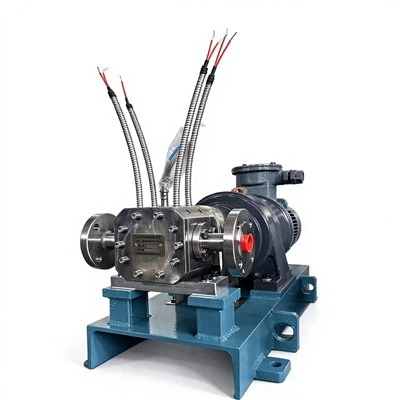
The ability of a rotor pump to handle high - viscosity fluids is a crucial factor that significantly influences its price. As a rotor pump price supplier, I have witnessed firsthand how this characteristic plays out in the market. In this blog, we will delve into the relationship between a rotor pump's high - viscosity fluid handling ability and its cost.


1. The Technical Challenges of Handling High - Viscosity Fluids
High - viscosity fluids present unique challenges to pump design and operation. Unlike low - viscosity fluids, which flow easily, high - viscosity fluids require more energy to move through the pump. The internal components of the rotor pump need to be carefully engineered to withstand the increased resistance and stress caused by these thick fluids.
For instance, the rotors of the pump must have a specific shape and material composition. They need to be able to create a sufficient seal against the pump housing to prevent leakage, even when dealing with fluids that have a high tendency to stick. Special coatings may be applied to the rotors to reduce friction and wear, which are more prevalent when handling high - viscosity substances.
The pump's motor also needs to be more powerful compared to pumps designed for low - viscosity fluids. A higher - powered motor can generate the necessary torque to drive the rotors through the thick fluid. Additionally, the motor may need to be more efficient to minimize energy consumption, as pumping high - viscosity fluids can be energy - intensive.
All these technical requirements add to the complexity of manufacturing a rotor pump capable of handling high - viscosity fluids. The research and development costs associated with designing and testing these pumps are substantial. Engineers need to conduct extensive experiments to optimize the pump's performance, which includes factors such as flow rate, pressure, and efficiency.
2. Impact on Manufacturing Costs
The materials used in the construction of a rotor pump for high - viscosity fluids are often of higher quality and more expensive. For example, the housing of the pump may be made from a corrosion - resistant alloy to withstand the potentially abrasive nature of high - viscosity fluids. These alloys are more costly than standard materials used in pumps for low - viscosity applications.
The manufacturing process for high - viscosity rotor pumps is also more intricate. Precision machining is required to ensure that the internal clearances between the rotors and the housing are within tight tolerances. Any deviation in these clearances can lead to reduced pump efficiency or even pump failure. This precision machining requires specialized equipment and skilled labor, both of which contribute to higher manufacturing costs.
Quality control is another area where costs increase. Each pump must undergo rigorous testing to ensure that it meets the required performance standards for handling high - viscosity fluids. This testing involves running the pump with various high - viscosity fluids under different operating conditions to verify its flow rate, pressure capabilities, and overall reliability. The time and resources spent on quality control add to the final cost of the pump.
3. Market Demand and Pricing
The market demand for rotor pumps that can handle high - viscosity fluids is relatively niche compared to pumps for low - viscosity applications. However, industries such as food processing, chemical manufacturing, and oil and gas often require these specialized pumps. Since the demand is not as high as for more common pumps, economies of scale are not as significant.
Manufacturers of high - viscosity rotor pumps cannot produce large quantities of pumps at a lower cost per unit. This lack of economies of scale means that the price per pump is higher. Additionally, the customers in these industries are often willing to pay a premium for a pump that can meet their specific requirements. They understand that the performance and reliability of a high - viscosity rotor pump are crucial for their operations, and they are willing to invest in a quality product.
The competition in the high - viscosity rotor pump market also affects pricing. While there are a few established players in the market, the number of suppliers is limited compared to the broader pump market. This limited competition allows manufacturers to set higher prices, especially for pumps with unique features or superior performance.
4. Examples of High - Viscosity Rotor Pumps and Their Pricing
To illustrate the relationship between high - viscosity handling ability and price, let's look at some specific examples. The Polyether Polyols Metering Pump is designed to handle polyether polyols, which are high - viscosity fluids commonly used in the production of polyurethane foams. This pump is engineered with precision components and a powerful motor to ensure accurate metering and efficient pumping of the thick fluid. As a result, its price is higher compared to pumps designed for low - viscosity fluids.
The B Series Epoxy Resin Universal Gear Metering Pump is another example. Epoxy resins are highly viscous substances used in various industries, including electronics and construction. This pump is built to handle the challenging flow characteristics of epoxy resins, with features such as corrosion - resistant materials and a robust design. The cost of this pump reflects the technical requirements and the quality of its construction.
The Strong Water Delivery Special Gear Metering Pump is designed for applications where high - viscosity water - based fluids need to be pumped. It has a unique gear design and a powerful motor to ensure efficient pumping of these thick fluids. The price of this pump is also influenced by its ability to handle high - viscosity substances and the associated manufacturing and design costs.
5. Conclusion and Call to Action
In conclusion, the ability of a rotor pump to handle high - viscosity fluids has a significant impact on its price. The technical challenges, manufacturing costs, market demand, and competition all contribute to the higher price of these specialized pumps. However, for industries that require the reliable pumping of high - viscosity fluids, the investment in a quality rotor pump is often justified by the benefits it provides.
If you are in need of a rotor pump for high - viscosity fluid applications, we invite you to contact us for a detailed discussion about your requirements. Our team of experts can help you select the right pump for your specific needs and provide you with a competitive price. We understand the importance of finding a cost - effective solution without compromising on quality, and we are committed to providing you with the best possible product and service.
References
- "Pump Handbook" by Igor J. Karassik et al.
- "Fluid Mechanics and Hydraulic Machines" by R. K. Bansal
- Industry reports on the pump market and high - viscosity fluid handling applications.