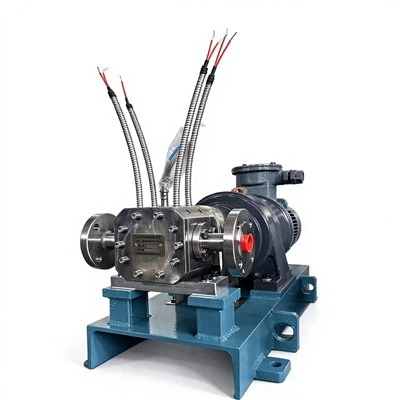
Adapting a gear metering pump to a high - altitude environment involves several key considerations. As a trusted Gear Metering Pump supplier, we understand the unique challenges that high - altitude conditions pose to these pumps. In this blog, we will explore how to effectively modify and optimize gear metering pumps for high - altitude use.
Understanding the High - Altitude Environment
The most significant characteristic of high - altitude environments is the lower atmospheric pressure. As altitude increases, the air density decreases, which has a direct impact on the performance of gear metering pumps. For instance, the lower pressure can cause cavitation in the pump, a phenomenon where vapor bubbles form in the liquid being pumped due to the reduced pressure. This can lead to damage to the pump components, such as the gears and the casing, and reduce the pump's efficiency and lifespan.


Another aspect is the temperature variation at high altitudes. The air is generally colder at higher elevations, and this can affect the viscosity of the fluid being pumped. If the fluid becomes too viscous in cold temperatures, it can increase the load on the pump, making it harder for the gears to rotate and causing additional wear.
Selecting the Right Materials
When adapting a gear metering pump for high - altitude use, material selection is crucial. The pump components need to be able to withstand the low - pressure and cold - temperature conditions. For the gears, high - strength alloys are often a good choice. These alloys can resist the wear and tear caused by cavitation and the increased load due to viscous fluids.
The pump casing should also be made of materials with good thermal conductivity and low - temperature resistance. Stainless steel is a popular option as it is corrosion - resistant, has good mechanical properties at low temperatures, and can handle the pressure differentials that may occur at high altitudes. Our Polyurethane Glue Pump Stainless Steel Gear Metering Pump is an excellent example, featuring a stainless - steel construction that is well - suited for high - altitude applications.
Modifying the Pump Design
To address the issue of cavitation at high altitudes, the pump design may need to be modified. One approach is to increase the inlet pressure of the pump. This can be achieved by using a pre - pressurization system, such as a booster pump or a pressure - regulating valve. By increasing the inlet pressure, the likelihood of cavitation is reduced as the pressure inside the pump remains higher than the vapor pressure of the fluid.
The clearances between the gears and the casing also need to be carefully adjusted. At high altitudes, the reduced air density means that there is less lubrication in the pump. Therefore, the clearances should be optimized to ensure proper fluid flow and minimize friction. A smaller clearance can help prevent fluid leakage, but it also increases the risk of the gears seizing up if the fluid viscosity increases due to cold temperatures.
Fluid Compatibility and Viscosity Management
As mentioned earlier, the viscosity of the fluid being pumped can change significantly in high - altitude environments. It is essential to select a fluid that is compatible with the pump and can maintain its properties under low - temperature conditions. Some fluids may require additives to improve their low - temperature performance.
Regular monitoring of the fluid viscosity is also necessary. This can be done using viscosity sensors installed in the pump system. If the viscosity exceeds the recommended range, measures such as heating the fluid or adjusting the pump speed can be taken to ensure smooth operation. Our Extrusion Gear Meteirng Pump is designed to handle a wide range of fluid viscosities, making it a suitable choice for high - altitude applications where viscosity changes are common.
Cooling and Lubrication Systems
In high - altitude environments, the cooling and lubrication systems of the gear metering pump need to be carefully designed. The lower air density means that natural convection cooling is less effective. Therefore, additional cooling mechanisms, such as forced - air cooling or liquid - cooling systems, may be required.
Lubrication is also a critical factor. The lubricant used in the pump should have good low - temperature properties to ensure proper lubrication of the gears and bearings. It should also be able to withstand the reduced air pressure without evaporating too quickly. Our B Series Epoxy Resin Universal Gear Metering Pump is equipped with an efficient lubrication system that can adapt to the challenging conditions of high - altitude environments.
Monitoring and Maintenance
Once the gear metering pump is installed in a high - altitude environment, continuous monitoring is essential. This includes monitoring the pump's performance parameters such as flow rate, pressure, and temperature. Any abnormal changes in these parameters can indicate a problem with the pump, such as cavitation or excessive wear.
Regular maintenance is also crucial to ensure the long - term reliability of the pump. This includes inspecting the pump components for wear and tear, replacing worn - out parts, and cleaning the pump to prevent the buildup of contaminants. Additionally, the fluid in the pump system should be regularly replaced to maintain its quality.
Conclusion
Adapting a gear metering pump to a high - altitude environment requires a comprehensive approach that takes into account the unique characteristics of the high - altitude environment, such as low atmospheric pressure and temperature variation. By selecting the right materials, modifying the pump design, managing fluid viscosity, and ensuring proper cooling and lubrication, we can optimize the pump's performance and reliability.
If you are in need of gear metering pumps for high - altitude applications or have any questions about pump adaptation, we are here to assist you. Our team of experts can provide you with customized solutions based on your specific requirements. Feel free to contact us for more information and to start a procurement discussion.
References
- "Pump Handbook" by Igor J. Karassik et al.
- "Fluid Mechanics and Hydraulics" by R. C. Hibbeler
- Technical papers on high - altitude pump applications from industry research institutions.