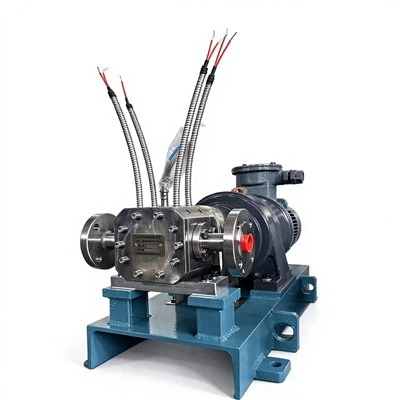
Hey there! As a supplier of Universal Gear Pumps, I've gotten tons of questions about how to adjust the speed of these pumps. Today, I'm gonna break it down for you in a super easy - to - understand way.
First off, let's talk a bit about Universal Gear Pumps. These pumps are pretty amazing. They're used in all sorts of industries, from chemical processing to food and beverage. They work by using two gears that mesh together. As the gears turn, they create a vacuum that sucks in fluid and then pushes it out at the other end.
Now, why would you want to adjust the speed of a Universal Gear Pump? Well, there are a few reasons. Maybe you need to change the flow rate of the fluid you're pumping. If you're filling containers, you might want a slower speed for more accurate filling. Or, if you're transferring a large amount of fluid quickly, you'll need a higher speed. Another reason could be to control the pressure. Different applications require different pressure levels, and adjusting the pump speed can help you achieve that.
So, how do you actually adjust the speed? There are a few methods, and I'll go through each one.
Mechanical Speed Adjustment
One of the most straightforward ways is through mechanical means. You can use a belt and pulley system. Most Universal Gear Pumps come with a pulley attached to the pump shaft. By changing the size of the pulley on the motor or the pump, you can change the speed ratio.
Let's say you want to increase the speed. You'd use a smaller pulley on the motor and a larger pulley on the pump. This way, the pump will rotate faster because the motor pulley is making more revolutions for each revolution of the pump pulley. On the other hand, if you want to slow it down, you'd do the opposite - use a larger pulley on the motor and a smaller one on the pump.
Another mechanical option is a gearbox. A gearbox can be installed between the motor and the pump. It has different gear ratios that you can select. By changing the gear ratio, you can adjust the speed of the pump. It's a bit more complex than the belt - and - pulley system, but it offers more precise control.
Variable Frequency Drive (VFD)
This is a more modern and popular method. A Variable Frequency Drive is an electronic device that controls the speed of an AC motor. Since most Universal Gear Pumps are driven by AC motors, a VFD can be a great solution.
The way a VFD works is by changing the frequency of the electrical power supplied to the motor. The speed of an AC motor is directly related to the frequency of the power. So, by increasing or decreasing the frequency, you can increase or decrease the motor speed, which in turn adjusts the speed of the pump.
Using a VFD has several advantages. It offers very precise speed control. You can set the exact speed you need, and the VFD will maintain it. It also helps save energy. When the pump doesn't need to run at full speed, the VFD can reduce the power consumption by lowering the motor speed.
However, there are also some downsides. VFDs can be expensive, especially for larger pumps. They also require some technical knowledge to install and program. But if you're looking for accurate and efficient speed control, it's definitely worth considering.


Hydraulic Speed Control
In some cases, hydraulic speed control can be used. This method is often used in industrial applications where there's already a hydraulic system in place.
A hydraulic motor can be used to drive the Universal Gear Pump. By adjusting the flow rate of the hydraulic fluid to the motor, you can change the speed of the motor and, consequently, the pump. This method offers good speed control and can handle high - power applications.
But it has its limitations too. Hydraulic systems can be complex and require regular maintenance. There's also the risk of hydraulic fluid leaks, which can be messy and potentially dangerous.
Considerations When Adjusting Speed
Before you start adjusting the speed of your Universal Gear Pump, there are a few things you need to keep in mind.
First, make sure you don't exceed the pump's maximum speed rating. Every pump has a specified maximum speed, and going beyond that can cause damage to the pump. It can lead to excessive wear and tear on the gears, seals, and other components, reducing the pump's lifespan.
Second, consider the viscosity of the fluid you're pumping. The viscosity affects how the pump performs at different speeds. If the fluid is very thick, a higher speed might cause cavitation. Cavitation is when bubbles form in the fluid due to low pressure, and it can damage the pump. So, you may need to adjust the speed based on the fluid's viscosity.
Third, think about the system pressure. As you adjust the pump speed, the pressure in the system will change. Make sure the pressure remains within the acceptable range for your application. If the pressure gets too high, it can cause leaks or damage to pipes and other components.
Where to Find Quality Universal Gear Pumps
If you're in the market for a Universal Gear Pump or need parts for your existing pump, we've got you covered. We offer a wide range of high - quality pumps, including the Polyether Polyols Metering Pump, the Gear Metering Pump With High Precision, and the Gear Metering Pump.
Our pumps are designed to be reliable and efficient, and we can provide you with all the support you need, whether it's adjusting the speed or any other maintenance.
Contact Us for Purchase and Consultation
If you're interested in our Universal Gear Pumps or have any questions about speed adjustment or other aspects of the pumps, don't hesitate to reach out. We're here to help you find the best solution for your specific needs. Whether you're a small business or a large industrial operation, we can offer the right pump and the right advice.
References
- "Gear Pump Handbook" - A comprehensive guide on gear pumps, their operation, and maintenance.
- Industry - specific technical papers on fluid pumping systems and speed control methods.