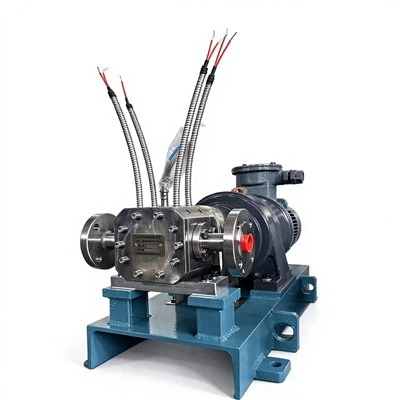
Calculating the torque required to drive a Rotary Gear Pump is a crucial step in ensuring its optimal performance and longevity. As a leading Rotary Gear Pump supplier, we understand the significance of accurate torque calculations in various industrial applications. In this blog post, we will delve into the key factors and methods involved in determining the torque needed to drive a Rotary Gear Pump effectively.
Understanding the Basics of a Rotary Gear Pump
Before we dive into torque calculations, let's briefly review how a Rotary Gear Pump works. A Rotary Gear Pump is a positive displacement pump that uses two meshing gears to transfer fluid. As the gears rotate, they create chambers that trap and move the fluid from the inlet to the outlet. The smooth and continuous operation of these gears is essential for efficient fluid transfer.
There are different types of Rotary Gear Pumps available, such as the Rotary Gear Pump with Motor and the CAM Rotor Pump. Each type has its own unique design and characteristics, which can influence the torque requirements.
Factors Affecting Torque Requirements
Several factors play a role in determining the torque needed to drive a Rotary Gear Pump. Understanding these factors is essential for accurate calculations. Here are the key factors to consider:
Viscosity of the Fluid
The viscosity of the fluid being pumped is one of the most significant factors affecting torque requirements. Viscosity refers to the resistance of a fluid to flow. Higher viscosity fluids require more torque to pump because they offer greater resistance to the movement of the gears. For example, pumping a thick oil will require more torque than pumping water.
Pressure Requirements
The pressure at which the pump needs to operate also impacts the torque requirements. Higher pressure applications demand more force to overcome the resistance and push the fluid through the system. As the pressure increases, the torque required to drive the pump also increases.
Pump Speed
The rotational speed of the pump, measured in revolutions per minute (RPM), affects the torque requirements. Generally, higher pump speeds require more torque to maintain the desired flow rate. However, it's important to note that excessive speed can also lead to increased wear and tear on the pump components.
Gear Size and Design
The size and design of the gears in the Rotary Gear Pump can influence the torque requirements. Larger gears typically require more torque to rotate, especially when pumping high-viscosity fluids. Additionally, the gear profile and tooth geometry can affect the efficiency of the pump and, consequently, the torque needed.


Calculating the Torque
Now that we understand the factors affecting torque requirements, let's explore the methods for calculating the torque needed to drive a Rotary Gear Pump. There are two main approaches: theoretical calculations and empirical methods.
Theoretical Calculations
Theoretical calculations involve using mathematical formulas to estimate the torque requirements based on the known parameters of the pump and the fluid. One common formula for calculating torque is:
[T = \frac{P \times Q}{2 \pi \times \eta \times N}]
Where:
- (T) is the torque (in Nm)
- (P) is the pressure (in Pa)
- (Q) is the flow rate (in m³/s)
- (\eta) is the efficiency of the pump
- (N) is the rotational speed (in rad/s)
To use this formula, you need to know the pressure, flow rate, efficiency, and rotational speed of the pump. The efficiency of the pump can be obtained from the manufacturer's specifications or estimated based on similar pumps.
Empirical Methods
Empirical methods involve conducting tests on the actual pump to measure the torque requirements under specific operating conditions. This approach is often more accurate than theoretical calculations, especially for complex or non-standard applications.
To perform an empirical test, you can use a torque sensor to measure the torque directly while the pump is running. By varying the operating conditions, such as the fluid viscosity, pressure, and pump speed, you can obtain a more comprehensive understanding of the torque requirements.
Considerations for Different Applications
The torque requirements for a Rotary Gear Pump can vary depending on the specific application. Here are some considerations for different industries and applications:
Chemical Industry
In the chemical industry, Rotary Gear Pumps are often used to transfer various chemicals with different viscosities and properties. When pumping high-viscosity chemicals, it's important to ensure that the pump has sufficient torque to handle the fluid. Additionally, the materials used in the pump construction must be compatible with the chemicals to prevent corrosion and damage.
Food and Beverage Industry
In the food and beverage industry, Rotary Gear Pumps are used for transferring liquids such as milk, syrup, and sauces. These applications require pumps that are hygienic and easy to clean. The torque requirements for these pumps are typically lower compared to industrial applications, as the fluids are usually less viscous.
Oil and Gas Industry
In the oil and gas industry, Rotary Gear Pumps are used for various applications, including crude oil transfer, lubrication, and hydraulic systems. These applications often involve high-pressure and high-viscosity fluids, which require pumps with high torque capabilities. Additionally, the pumps must be able to operate in harsh environments and withstand extreme temperatures and pressures.
Importance of Accurate Torque Calculations
Accurate torque calculations are essential for several reasons:
Optimal Performance
By ensuring that the pump has sufficient torque to operate effectively, you can achieve optimal performance and efficiency. This can result in improved flow rates, reduced energy consumption, and longer pump life.
Equipment Protection
Overloading a pump with insufficient torque can lead to premature wear and tear on the pump components, such as the gears, bearings, and seals. This can result in costly repairs and downtime. On the other hand, providing too much torque can also cause unnecessary stress on the pump and increase energy consumption.
Safety
Operating a pump with incorrect torque can pose safety risks. For example, if the pump is unable to handle the required pressure or flow rate, it can lead to leaks, spills, or other hazardous situations. Accurate torque calculations help ensure the safe and reliable operation of the pump.
Conclusion
Calculating the torque required to drive a Rotary Gear Pump is a complex but essential process. By considering the factors affecting torque requirements, using appropriate calculation methods, and taking into account the specific application, you can ensure that the pump operates efficiently and reliably.
As a trusted Rotary Gear Pump supplier, we have the expertise and experience to help you select the right pump for your application and provide accurate torque calculations. If you have any questions or need assistance with your Rotary Gear Pump requirements, please don't hesitate to contact us. We look forward to discussing your needs and finding the best solution for you.
References
- Pump Handbook, Karassik et al.
- Fluid Mechanics, Frank M. White
- Industrial Pumping Systems, John P. Bloch