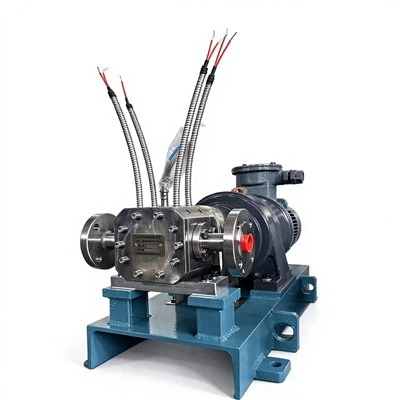
Hey there! As a supplier of rotor pumps, I've been getting a lot of questions lately about how the modular design impacts the price of these pumps. So, I thought I'd take some time to break it down for you.
First off, let's talk about what a modular design actually means for a rotor pump. In simple terms, a modular design allows different components of the pump to be easily interchanged or combined. This means that instead of having a one - size - fits - all pump, you can customize it according to your specific needs. For example, you might want to change the size of the rotor, the type of seals, or the material of the housing.
Now, when it comes to the price, there are a few factors at play. One of the main things that affects the cost is the level of customization that the modular design enables. If you're just looking for a basic pump with standard components, the price is likely to be on the lower end. But if you need a highly customized pump with special features, well, that's going to cost you more.
Let's start with the cost of the basic components. The standard parts of a rotor pump, like the rotors, housing, and shafts, are relatively inexpensive when mass - produced. Manufacturers can make these in large quantities, which drives down the per - unit cost. However, when you start adding modular features, things get a bit more complicated.
For instance, if you want a pump with a special rotor design for handling a particular type of fluid, the manufacturer may need to use more advanced manufacturing techniques or materials. This can increase the cost of production. Specialized seals, which are often an important part of a modular pump, can also be quite pricey. High - quality seals that can withstand extreme temperatures or corrosive fluids need to be made from expensive materials, and that cost is passed on to the customer.
Another factor is the research and development (R&D) that goes into creating modular designs. Developing a modular system requires a lot of time and resources. Engineers have to design components that fit together perfectly and ensure that the pump works efficiently in different configurations. All of this R&D costs money, and again, it's reflected in the price of the pump.
But it's not all bad news. The modular design also has some cost - saving benefits in the long run. Since you can customize the pump to your exact needs, you're less likely to over - pay for features you don't need. For example, if you only need a pump for low - pressure applications, you can choose a modular design that doesn't include high - pressure components. This can save you a significant amount of money compared to buying a standard pump with all the bells and whistles.
Moreover, modular pumps are often easier to maintain. If a component fails, you can simply replace it instead of having to replace the entire pump. This can reduce maintenance costs over the life of the pump. And let's not forget about the flexibility. As your business grows or your requirements change, you can easily upgrade your pump by adding new modules. This means you don't have to buy a whole new pump every time you need a change.
Now, let's take a look at some of the specific types of pumps in our catalog. We offer a Polyurethane Glue Metering Pump that has a modular design. This pump is great for applications where you need precise metering of polyurethane glue. The modular design allows you to adjust the flow rate and pressure according to your needs. You can also choose different types of rotors and seals to ensure optimal performance.
Another option is our Epoxy Resin Gear Metering Pump Extrusion Pump. This pump is designed for handling epoxy resin, which can be a tricky fluid to work with. The modular design makes it easy to customize the pump for different epoxy resin viscosities and extrusion requirements. You can swap out the gears and other components to get the best results.
And if you're looking for a more universal solution, our B Series Epoxy Resin Universal Gear Metering Pump is a great choice. It's designed to be highly adaptable and can be used in a variety of applications. The modular design allows you to configure the pump for different flow rates, pressures, and fluid types.
So, to sum it up, the price of a rotor pump is definitely affected by its modular design. While there are upfront costs associated with customization and R&D, there are also long - term savings in terms of maintenance and flexibility. If you're in the market for a rotor pump, I'd encourage you to consider a modular design. It might cost a bit more at first, but it could save you a lot of money in the long run.
If you're interested in learning more about our rotor pumps or getting a quote, don't hesitate to reach out. We're here to help you find the perfect pump for your needs. Whether you're a small business or a large industrial operation, we have the expertise and the products to meet your requirements. Let's have a chat and see how we can work together to get you the best pump at the best price.


References
- "Pump Handbook" by Igor J. Karassik et al.
- Industry reports on pump manufacturing and design trends.