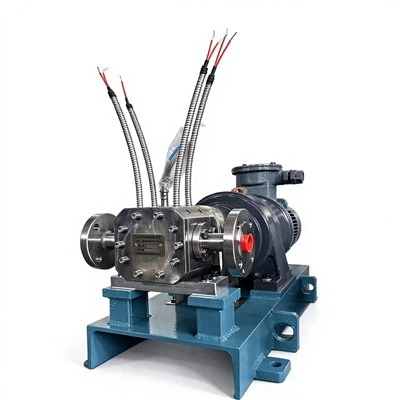
As a supplier of high viscosity pumps, I often get asked about the minimum temperature these pumps can withstand. It's a crucial question, especially for industries that operate in cold environments or deal with substances that need to be kept at low temperatures. In this blog, I'll share some insights based on my experience in the field.
First off, it's important to understand that the minimum temperature tolerance of high viscosity pumps can vary widely depending on several factors. One of the most significant factors is the type of pump. For example, Reinforced Stainless Steel High Viscosity Gear Metering Pump is designed with certain materials and construction that influence its temperature limits.
Stainless steel is a common material used in these pumps. It has good resistance to corrosion and can handle a range of temperatures. However, extremely low temperatures can make the material more brittle. This means that at very cold temperatures, there's a risk of the pump components cracking or failing. Generally, most reinforced stainless steel high viscosity gear metering pumps can withstand temperatures down to around -20°C to -40°C. But this can change depending on the specific alloy of stainless steel used and the thickness of the pump walls.
Another type of pump, the Magnetic Gear Pump, also has its own temperature limitations. The magnetic coupling in these pumps is sensitive to temperature changes. At low temperatures, the magnetic properties of the coupling can be affected. This might lead to a decrease in the pump's efficiency or even a complete loss of the magnetic connection. Typically, magnetic gear pumps can handle temperatures down to about -10°C to -30°C. The exact minimum temperature depends on the quality of the magnetic materials and the design of the coupling.
Industrial Gear Pumps are often used in heavy - duty applications. They are built to be more robust, but they still have temperature restrictions. The seals and gaskets in industrial gear pumps are critical components. At low temperatures, these seals can harden and lose their flexibility. This can result in leaks and reduced pump performance. Most industrial gear pumps can operate down to approximately -30°C to -50°C, but again, this is subject to the type of seals and gaskets used.
The viscosity of the fluid being pumped also plays a huge role in determining the minimum temperature. As the temperature drops, the viscosity of most fluids increases. High - viscosity fluids are already more difficult to pump, and when they get even thicker at low temperatures, it puts more stress on the pump. For example, if you're pumping a thick oil at normal temperatures, it might become almost solid at very low temperatures. This can cause the pump to jam or require much more power to operate.
Lubrication is another aspect to consider. The internal components of high viscosity pumps need proper lubrication to function smoothly. At low temperatures, the lubricants can thicken or even solidify. This can lead to increased friction between the moving parts, which can cause wear and tear and eventually pump failure. Some pumps are designed to use special low - temperature lubricants that can maintain their properties at colder temperatures.
In addition to the pump design and the fluid characteristics, the operating conditions also matter. If the pump is exposed to rapid temperature changes, it can cause thermal stress. For instance, if a pump that has been operating at a normal temperature is suddenly exposed to a very cold environment, the different parts of the pump will contract at different rates. This can lead to internal stresses that may damage the pump over time.
To ensure the reliable operation of high viscosity pumps at low temperatures, there are some precautions that can be taken. Pre - heating the pump and the fluid before starting can help. This reduces the initial stress on the pump and makes it easier to start pumping. Insulating the pump can also help maintain a more stable temperature. There are various types of insulation materials available that can be wrapped around the pump to prevent heat loss.
Another option is to use a temperature - monitoring system. This can help you keep track of the pump's temperature and take action if it starts to approach the minimum tolerance level. For example, you can set up an alarm that alerts you when the temperature drops too low.
In conclusion, the minimum temperature that high viscosity pumps can withstand varies depending on the pump type, the fluid being pumped, and the operating conditions. While reinforced stainless steel high viscosity gear metering pumps can generally handle temperatures down to -20°C to -40°C, magnetic gear pumps around -10°C to -30°C, and industrial gear pumps about -30°C to -50°C, these are just rough estimates.
If you're in an industry that requires high viscosity pumps to operate in cold environments, it's essential to choose the right pump for your specific needs. You also need to take proper precautions to ensure the pump's longevity and reliable performance.
If you're interested in learning more about our high viscosity pumps or are looking to purchase one for your application, we'd love to have a chat with you. Contact us to start a discussion about your requirements, and we'll work together to find the best solution for you.
References


- "Pump Handbook" by Igor J. Karassik et al.
- Industry research reports on high viscosity pump performance at low temperatures.