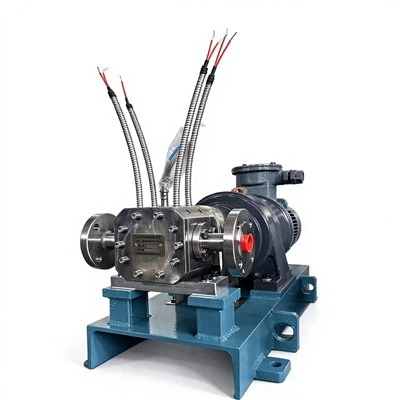
Hey there! As a supplier of Plastic Gear Pumps, I often get asked about the noise level of these pumps. It's a crucial factor, especially in environments where low noise is a must, like in some high - tech labs or quiet industrial settings. So, let's dive right into what the noise level of a plastic gear pump is all about.
What Causes Noise in Plastic Gear Pumps
First off, to understand the noise level, we need to know what causes the noise in the first place. There are a few key factors.
One major cause is the meshing of the gears. When the teeth of the plastic gears come into contact and disengage, it creates a mechanical impact. This impact generates vibrations, which then translate into noise. The design of the gear teeth, such as their shape, size, and the precision of their manufacturing, can greatly affect how noisy this meshing process is. For instance, if the gears are not properly machined, the meshing will be less smooth, leading to louder impacts and more noise.
Another factor is the flow of the fluid through the pump. As the pump operates, it moves the fluid from the inlet to the outlet. Turbulence in the fluid flow can cause noise. This turbulence can be due to various reasons, like the shape of the pump's internal channels. If the channels are too narrow or have sharp bends, the fluid will experience more resistance and form eddies, which create noise.
The quality of the plastic material used also plays a role. Different plastics have different damping properties. Some plastics can absorb vibrations better than others. If a low - quality plastic is used, it may not be able to dampen the vibrations caused by gear meshing and fluid flow effectively, resulting in a higher noise level.


Measuring the Noise Level
Now, how do we measure the noise level of a plastic gear pump? Well, the most common unit of measurement is the decibel (dB). A sound level meter is used to measure the noise. The meter is placed at a specific distance from the pump, usually according to industry standards.
In general, the noise level of a plastic gear pump can vary widely depending on its size, design, and operating conditions. Smaller plastic gear pumps tend to be quieter than larger ones. This is because they usually have smaller gears and a lower flow rate, which means less mechanical impact and fluid turbulence.
On average, a well - designed and properly maintained small - sized plastic gear pump might produce noise in the range of 40 - 60 dB. This is comparable to the noise level of a normal conversation in a quiet room. However, larger plastic gear pumps or those with poor design can produce noise levels up to 80 - 90 dB, which is as loud as a vacuum cleaner or a busy street.
Factors Affecting the Noise Level
Let's take a closer look at some of the factors that can affect the noise level of a plastic gear pump.
Pump Speed: The rotational speed of the pump's gears has a significant impact on the noise level. As the speed increases, the frequency and intensity of the gear meshing impacts also increase. So, a pump running at a high speed will generally be noisier than one running at a lower speed. For example, if you reduce the pump speed by half, the noise level can be significantly reduced.
Fluid Viscosity: The viscosity of the fluid being pumped matters too. High - viscosity fluids are more difficult to pump, and they can cause more turbulence in the pump. This increased turbulence leads to more noise. So, if you're pumping a thick fluid like honey, the pump will likely be noisier compared to when it's pumping a thin fluid like water.
Installation and Mounting: How the pump is installed and mounted can also affect the noise level. If the pump is not properly mounted on a stable surface, it can vibrate more, transferring the vibrations to the surrounding environment and increasing the noise. Using vibration - isolating mounts can help reduce the noise by absorbing some of the vibrations.
Reducing the Noise Level
As a supplier, we're always looking for ways to reduce the noise level of our plastic gear pumps. Here are some methods we use.
Improved Gear Design: We invest in research and development to design gears with better tooth profiles. For example, using helical gears instead of spur gears can reduce the noise. Helical gears have a more gradual meshing process, which results in smoother operation and less noise.
Optimized Fluid Channels: We design the internal channels of the pump to minimize fluid turbulence. This includes using rounded bends and ensuring a consistent cross - sectional area along the channels. By doing so, the fluid can flow more smoothly, reducing the noise caused by turbulence.
High - Quality Plastic Materials: We carefully select high - quality plastics with good damping properties. These plastics can absorb the vibrations generated by the pump's operation, reducing the noise level.
Our Product Range and Noise Levels
We offer a wide range of plastic gear pumps, each with different noise characteristics.
Our Composite Material Pump For Benzene Sulfonic Acid is designed to handle the transfer of benzene sulfonic acid. Thanks to its advanced design and high - quality materials, it operates relatively quietly. The noise level is typically in the range of 45 - 55 dB, making it suitable for applications where a quiet working environment is required.
Our Chemical Metering Gear Pumps are used for precise metering of chemicals. These pumps are engineered to have smooth gear meshing and optimized fluid flow, resulting in a low noise level. They usually produce noise in the range of 40 - 60 dB, depending on the specific model and operating conditions.
The Composite Material Gear Metering Pump is another great product in our lineup. It uses a composite material that provides excellent damping properties. This pump has a relatively low noise level, typically around 50 - 60 dB, making it a good choice for applications where noise reduction is important.
Why Choose Our Plastic Gear Pumps
If you're in the market for a plastic gear pump, there are several reasons to choose our products.
First of all, we focus on quality. We use the best - in - class materials and advanced manufacturing processes to ensure that our pumps are reliable and have a low noise level. Our pumps are also designed to be energy - efficient, which not only saves you money on energy costs but also reduces the wear and tear on the pump, further contributing to a longer lifespan and lower noise over time.
Secondly, we offer excellent customer service. Our team of experts is always ready to help you choose the right pump for your specific application. We can provide technical support and advice on installation, operation, and maintenance.
Contact Us for Purchase
If you're interested in our plastic gear pumps and want to learn more about their noise levels or other features, don't hesitate to contact us. We're eager to discuss your requirements and find the perfect pump for you. Whether you need a pump for a small - scale laboratory application or a large - scale industrial process, we have the right solution.
References
- "Pump Noise and Vibration Control" by Pump Handbook, McGraw - Hill
- "Fluid Mechanics and Its Application in Pumps" by Elsevier
- Industry standards for pump noise measurement and testing
So, that's all about the noise level of a plastic gear pump. I hope this blog has been helpful to you in understanding the factors that affect the noise and why our pumps are a great choice. Looking forward to hearing from you!