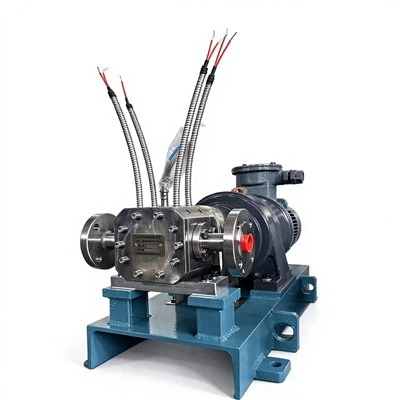
Hey there! I'm a supplier of high viscosity pumps, and I'm super stoked to chat with you about what makes a high viscosity pump top - notch. You see, high viscosity pumps are essential in a bunch of industries. These types of pumps are used to move thick, sticky fluids, and not just any pump can do this job well. So, what are the standards for high viscosity pumps? Let's dive right in.
1. Flow Rate and Pressure
First off, when it comes to high viscosity pumps, the flow rate and pressure are crucial. A good high viscosity pump should be able to maintain a steady and consistent flow rate even when dealing with thick fluids. The pressure is also a big deal because the pump needs to generate enough force to push the thick liquid through the piping system.
Let's say you're in the food industry and you're trying to pump honey, which is incredibly thick. If the pump can't keep a constant flow rate, it can cause problems in the production line. The same goes for the pressure. If the pressure isn't high enough, the honey won't move through the pipes efficiently.
As a supplier, I always make sure that our pumps are designed to handle different flow rates and pressures. We've got pumps that can handle low flow rates for applications where precision is key, like in some pharmaceutical processes. And we also have pumps that can generate high pressures for more demanding tasks, like pushing thick polymers through a long pipeline.
2. Viscosity Handling Capability
This one's a no - brainer. A high viscosity pump needs to handle thick fluids effectively. There's a wide range of viscosities out there, from something like maple syrup to extremely thick asphalt. A good pump should be able to handle different levels of viscosity without any major issues.
Our pumps are engineered to be really versatile. We've done a ton of testing with various viscous materials to make sure they work well. Whether it's a Magnetic Driving Pump For P - toluenesulfonic Acid that needs to handle a specific chemical with a high viscosity, or a Chemical Fiber Spinning Gear Metering Pump for the textile industry, we've made sure they can handle the job.
3. Durability and Reliability
No one wants a pump that breaks down after a short period of use, especially when it's dealing with high - viscosity fluids. The pump needs to be durable enough to withstand the wear and tear that comes with pumping thick substances.
We use high - quality materials in our pumps. For example, our Reinforced Stainless Steel High Viscosity Gear Metering Pump is made of stainless steel that's extra tough. It can resist corrosion, which is a big issue when pumping certain chemicals. Also, the design of our pumps is optimized for long - term reliability. We've got seals and gaskets that are made to last, so there's less chance of leaks and other problems.
4. Energy Efficiency
In today's world, energy efficiency is a huge deal. Running a high viscosity pump can use a lot of energy, so it's important to have a pump that doesn't gobble up electricity like crazy.
Our pumps are designed with energy efficiency in mind. We use advanced technologies to reduce the energy consumption without sacrificing performance. For instance, we've optimized the impeller design in some of our pumps to make them more efficient. This not only saves you money on your energy bills but also makes your operations more environmentally friendly.
5. Easy Maintenance
Let's face it, no one has time for a complicated maintenance schedule. A good high viscosity pump should be easy to maintain. That means it should be easy to access the parts that need to be serviced, and the replacement parts should be readily available.


We make sure our pumps are designed with accessibility in mind. The covers and panels are easy to remove, so you can quickly get to the internal components. And we also keep a large inventory of replacement parts, so you don't have to wait ages to get your pump up and running again if something goes wrong.
6. Material Compatibility
The pump needs to be compatible with the fluid it's pumping. If the pump material reacts with the fluid, it can cause all sorts of problems, like corrosion and contamination.
When we design our pumps, we take material compatibility into account. We have different pumps made from different materials for different applications. For example, if you're pumping acidic fluids, we have pumps made from acid - resistant materials. So, you can be sure that your pump will work well without causing any chemical reactions with the fluid.
7. Precision and Accuracy
In some industries, like the pharmaceutical and chemical industries, precision and accuracy are crucial. The pump needs to dispense the correct amount of fluid at the right time.
Our pumps are engineered to be highly precise. They can meter the fluid accurately, whether it's a small amount or a large volume. This is especially important in processes where the ratio of different ingredients needs to be exact.
Why Choose Our High Viscosity Pumps?
We've put a lot of time and effort into developing pumps that meet and exceed these standards. Our team of experts is constantly working to improve our products. We offer a wide range of high viscosity pumps to suit different applications and budgets. Whether you're a small business just starting out or a large corporation with high - volume needs, we've got the right pump for you.
So, if you're in the market for a high viscosity pump, don't hesitate to reach out. We'd love to have a chat with you about your specific requirements and help you find the perfect pump for your business. Contact us today to start the procurement discussion and take your operations to the next level.
References
- "Pump Handbook" by Igor J. Karassik et al.
- "Fluid Mechanics and Hydraulic Machines" by R. K. Bansal
- Industry reports on high - viscosity pump technology and applications.