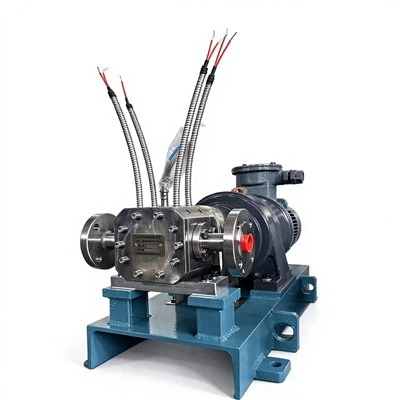
When it comes to marine applications, rotor pumps play a crucial role in various operations. As a rotor pump price supplier, I've had the privilege of delving deep into the world of these pumps and understanding their significance and cost factors within the marine industry.
Understanding Rotor Pumps for Marine Applications
Rotor pumps are positive displacement pumps that use rotating elements, or rotors, to move fluid through the pump. In marine settings, they are used for a variety of tasks such as fuel transfer, bilge pumping, and cargo handling. Their design allows them to handle viscous fluids efficiently, which is often necessary in marine environments where fuels and oils with high viscosities are common.
One of the key advantages of rotor pumps in marine applications is their ability to provide a consistent flow rate. This is essential for maintaining the proper operation of equipment that relies on a steady supply of fluids, such as engines and hydraulic systems. They are also known for their self - priming capabilities, which means they can quickly remove air from the suction line and start pumping fluid without the need for external priming devices. This feature is particularly useful in marine applications where the pump may need to be started under various conditions.
Factors Affecting the Price of Rotor Pumps for Marine Applications
1. Material Quality
The materials used in the construction of rotor pumps have a significant impact on their price. In marine environments, pumps are exposed to harsh conditions, including saltwater corrosion and abrasive particles. Therefore, high - quality materials such as stainless steel, bronze, and special alloys are often used to ensure the durability and reliability of the pump. For example, a rotor pump made of high - grade stainless steel will generally cost more than one made of a lower - grade material. This is because stainless steel offers better corrosion resistance, which is essential for long - term use in a marine environment.
2. Pump Size and Capacity
The size and capacity of the rotor pump are also important price - determining factors. Larger pumps with higher flow rates and greater pressure capabilities are more expensive than smaller, less powerful models. In marine applications, the size of the pump required depends on the specific task. For instance, a large ocean - going vessel may need a high - capacity rotor pump for fuel transfer, while a small pleasure boat may only require a smaller pump for bilge pumping. The more complex the fluid transfer requirements, the larger and more expensive the pump is likely to be.
3. Pump Design and Features
The design and features of the rotor pump can also affect its price. Some pumps come with advanced features such as adjustable flow rates, built - in pressure relief valves, and low - noise operation. These features add to the functionality and value of the pump but also increase its cost. For example, a pump with an adjustable flow rate allows for more precise control of the fluid transfer process, which can be crucial in certain marine operations such as cargo loading and unloading.
4. Brand and Manufacturer
The brand and manufacturer of the rotor pump can also influence its price. Well - established brands with a reputation for quality and reliability often charge a premium for their products. These brands typically invest more in research and development, quality control, and customer support. On the other hand, lesser - known brands may offer more affordable options, but there may be some trade - offs in terms of product quality and after - sales service.
Pricing Range of Rotor Pumps for Marine Applications
The price of rotor pumps for marine applications can vary widely depending on the factors mentioned above. A small, basic rotor pump for a small boat's bilge pumping system may cost anywhere from a few hundred dollars to a couple of thousand dollars. These pumps are usually made of less expensive materials and have relatively low flow rates and pressure capabilities.
For medium - sized vessels, such as fishing boats or small yachts, a rotor pump for fuel transfer or other general fluid handling tasks can range from $2,000 to $10,000. These pumps are often made of higher - quality materials and may have more advanced features.
Large - scale rotor pumps used in commercial shipping vessels or offshore platforms can cost upwards of $10,000 and can go as high as several hundred thousand dollars. These pumps are designed to handle large volumes of fluid at high pressures and are built to withstand the most demanding marine conditions.
Related Products and Their Links
In addition to rotor pumps, there are other types of pumps that are relevant to marine and industrial applications. For example, the One Component Polyurethane Glue Universal Pump is a specialized pump that can be used in applications where precise dispensing of one - component polyurethane glue is required.


The Gear Metering Pump is another important product. It is designed to provide accurate and consistent metering of fluids, which is essential in many marine and industrial processes.
The Solvent - free Gear Metering Pump offers the advantage of being able to handle solvent - free fluids, which is an increasingly important requirement in many industries due to environmental concerns.
Why Choose Our Rotor Pumps
As a rotor pump price supplier, we understand the needs of the marine industry. Our pumps are designed with high - quality materials to ensure long - lasting performance in harsh marine environments. We offer a wide range of models with different sizes, capacities, and features to meet the diverse requirements of our customers.
We also provide excellent customer support, including technical advice and after - sales service. Whether you are a small boat owner or a large shipping company, we can help you find the right rotor pump at a competitive price.
Contact Us for Procurement and Negotiation
If you are interested in purchasing a rotor pump for your marine application, we encourage you to contact us for procurement and negotiation. We understand that every customer's needs are unique, and we are willing to work with you to find the best solution that fits your budget and requirements.
References
- "Marine Pump Technology Handbook", Published by an industry - leading publisher focusing on marine engineering.
- "Positive Displacement Pumps: Principles and Applications", A comprehensive textbook that provides in - depth knowledge of positive displacement pumps, including rotor pumps.