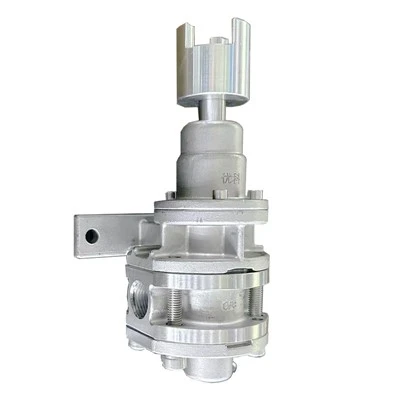
If you’ve ever stood on a production floor where a single faulty component derails an entire batch, you know the value of equipment that fits your exact needs—no compromises. As a motor gear pump supplier, I’ve spent years walking plant engineers and maintenance teams through the customization options that turn a generic pump into a workhorse tailored to their process. Over the past decade, I’ve watched customers who stuck to off-the-shelf parts deal with leakages, inconsistent flow, and unplanned downtime, while those who worked with our team to tweak small details saved tens of thousands in annual operational costs. Today, I want to break down the key customizable aspects of motor gear pumps, and share real examples of how these adjustments make all the difference for industries ranging from chemical processing to food and beverage.
First, let’s start with the most obvious but often overlooked customizable part: the pump’s construction materials. The wrong material can lead to corrosion, contamination, or premature wear—issues that aren’t just inconvenient, they’re costly. When a customer in the resin industry came to us last year, they were struggling with their existing pump breaking down every three months because the resin sand mix they handled was abrasive and chemically aggressive. Off-the-shelf pumps, typically made of standard carbon steel, couldn’t hold up to the constant friction and exposure to acidic resins. We worked with their team to specify a fully stainless steel build, and that simple material upgrade extended the pump’s lifespan to over 18 months. For many applications, though, standard stainless steel is perfect. Our Cast 304 Gear Metering Pumps, for example, use Type 304 stainless steel for the pump housing and gears, a versatile material that resists corrosion from mild chemicals and is easy to clean for industries that require sanitation. But when you’re dealing with harsher materials like hot melt adhesives or isocyanates, Type 316 stainless steel is non-negotiable—it has additional molybdenum that makes it far more resistant to pitting and corrosion. A customer in the packaging industry recently switched to our high precision stainless steel hot melt adhesive gear metering pump specifically for this reason, and they reported zero corrosion-related failures after six months of heavy use. Even for food-grade applications, material customization is critical: we can polish pump surfaces to food-grade standards, eliminating crevices where bacteria could grow, a must for teams handling syrups, oils, or other consumable materials. Moving away from metals, we can also customize with engineering plastics for low-pressure, non-corrosive applications, reducing weight and cost without sacrificing performance.
Next, gear design is where the precision of a motor gear pump lives—and where the biggest customization wins happen. Gears aren’t one-size-fits-all, and tweaking their shape, size, and tolerance directly impacts flow rate, pressure, and accuracy. Standard gears work for general transfer tasks, but metering applications—where you need a precise, consistent amount of material dispensed every time—demand more. Our high precision rotor gear pump, for example, features gears with tight tolerance machining (often within microns) to deliver flow accuracy of ±0.5% or better, a must for industries like cosmetics or pharmaceuticals where even small errors in ingredient ratios ruin products. But gear customization goes beyond just accuracy. The number of teeth, tooth profile, and gear size can all be adjusted to match specific flow requirements. For a customer manufacturing polyether polyols (used in foams and coatings), standard gears were delivering flow rates that were either too high or too low for their batch sizes. We modified the gear set in their pump to a 12-tooth profile instead of the standard 10, reducing the displacement per revolution and letting them dial in a flow rate that exactly matched their mixing process. We also can adjust gear spacing to reduce internal leakage—when material slips past the gears instead of being pumped out— which is a common issue in high-pressure applications. A recent customer in the chemical processing sector was dealing with a 10% leakage rate on their existing pump, leading to material waste and inconsistent batch quality. By adjusting the gear clearances to a custom specification, we cut leakage to less than 1%, saving them over $15,000 annually in wasted raw materials. For abrasive materials, we can even harden the gear surfaces through processes like nitriding or chrome plating, extending gear life by resisting wear from particles in the fluid.
Motor and drive customization is another area that’s often overlooked, but it’s make-or-break for many processes. The motor is what powers the pump, and matching it to your application’s speed, power, and control needs ensures the pump runs efficiently and reliably. Standard pumps come with fixed-speed motors, but if your process requires variable flow (like a batch process where flow needs to change mid-cycle), a fixed-speed motor won’t cut it. We can customize motors to include variable frequency drives (VFDs), which let you adjust the pump’s speed in real time, matching flow rate exactly to your process demands. This is a huge energy saver too: a customer in the paint manufacturing industry switched to a variable-speed motor on their pump and reduced their energy consumption by 22%, because they only ran the pump at full speed when needed, instead of running continuously at maximum capacity. We also customize motor enclosures for harsh environments. If a pump is going to be used in an outdoor setting where it’s exposed to dust, moisture, or extreme temperatures, we can specify NEMA 4X rated enclosures that are waterproof and corrosion-resistant, or explosion-proof enclosures for facilities that handle flammable materials. For applications that require precise synchronization with other equipment (like a mixer or extruder), we can integrate the motor with a programmable logic controller (PLC), letting the pump work seamlessly as part of an automated system. A customer in the composite materials industry recently had their pump integrated with their existing mixing PLC, so the flow rate of the pump automatically adjusts based on the mixer’s speed, eliminating the need for manual adjustments and reducing human error. Even the motor’s power rating can be customized: for low-viscosity fluids like solvents, a smaller, lower-power motor works, while high-viscosity fluids like resins or heavy oils need a more powerful motor to overcome the friction of moving thick material.
Pump housing and port customization are often the last things people think about, but they solve a lot of practical on-floor problems. The pump housing is the body that holds the gears, and customizing its shape, size, and port configuration can make the pump fit seamlessly into your existing system, no retrofitting required. Standard pumps have inlet and outlet ports that are sized for average flow, but if your piping system uses larger or smaller connections, custom ports eliminate the need for adapters—reducing leak points and installation time. A customer in the water treatment industry had an existing piping system with 4-inch ports, but off-the-shelf pumps only came with 2-inch ports. We modified the pump housing to include 4-inch inlet and outlet ports, so they could connect directly without changing their entire piping setup, saving them over $2,000 in installation costs and avoiding weeks of downtime. We can also customize the housing material we mentioned earlier, but also its shape—for tight spaces, we can design compact housings that fit into smaller footprints, or for high-pressure applications, we can reinforce the housing with extra thickness to prevent deformation. Another common customization here is adding features like relief valves, which protect the pump from damage if the outlet gets blocked. Standard pumps don’t always include these, but adding a custom relief valve set to your system’s maximum pressure prevents overpressure that can crack the housing or wear out the gears. For pumps used in food and beverage, we can also add sanitary connections like tri-clamp ports, which are easy to take apart for cleaning—a requirement for facilities that follow FDA sanitation standards. A local bakery that uses our pumps for batter mixing recently switched to tri-clamp ports, cutting their cleaning time per batch by 40% because they don’t have to use special tools to disconnect the pump.
Seal and shaft customization is critical for preventing leaks, which is a top complaint among pump users. A leaky pump doesn’t just waste material—it creates safety hazards, like slip-and-fall risks on the production floor, or contamination if the leaked fluid is hazardous. The seal is the component that keeps fluid from leaking out around the pump shaft, and customizing it to your fluid and operating conditions is key. Standard mechanical seals work for most general applications, but for high-temperature fluids like hot melt adhesives, we can specify high-temperature seals that can handle temperatures up to 500°F, without breaking down or leaking. For abrasive fluids, we can use hard-faced seals made of materials like silicon carbide, which resist wear from particles in the fluid. For applications that require zero leakage (like handling sterile pharmaceuticals), we can use magnetic drive seals instead of mechanical seals—these seal the entire pump, so there’s no direct connection between the shaft and the outside, eliminating any chance of leakage. A customer in the biotech industry switched to a magnetic drive seal on our Polyether Polyols Metering Pump, and they reported zero leakage over two years of use, a huge improvement over their previous pump that was leaking 5 gallons per week. We also customize shaft materials: for corrosive fluids, we can use Hastelloy shafts instead of standard steel, resisting corrosion that would cause seal failure. Even the seal’s configuration can be adjusted—for example, a double seal for high-pressure applications, or a flush seal that flushes clean fluid around the seal to prevent buildup from abrasive materials.
Over the years, I’ve seen firsthand how a small customization can turn a frustrating, high-maintenance pump into a reliable asset that keeps production running smoothly. One of my favorite examples is the Special Stainless Steel Metering Pump For Resin Sand Mixer we worked on a few years ago. The customer had been struggling with pumps that couldn’t handle the abrasive resin sand mix, were leaking constantly, and required replacement every three months. We customized the material to 316 stainless steel, adjusted the gear design to reduce wear, and added a magnetic drive seal to eliminate leakage. The pump they’ve been using has now run for over two years without a major failure, saving them hundreds of thousands in replacement and downtime costs. The Polyether Polyols Metering Pump we built for a foam manufacturer is another example: by tweaking the gear profile and adding a variable-speed motor, we let them adjust flow rates for different foam formulas, expanding their product line without buying new equipment.
At the end of the day, motor gear pump customization isn’t about making parts more complex—it’s about solving the specific problems your process faces. Whether you need a different material to resist corrosion, a custom gear to improve accuracy, a variable motor to match your flow, or a special seal to stop leaks, the right customization makes all the difference. If you’re tired of pumps that don’t fit your needs, cause unnecessary downtime, or waste your raw materials, it’s time to talk through your requirements. We work with customers across every industry, from small batch manufacturers to large-scale chemical plants, to design pumps that fit their exact processes, no compromises needed. Reach out today to discuss your motor gear pump needs, and let’s build a solution that keeps your production running reliably.


References
- Hydraulic Institute. (2022). Pump Customization for Industrial Applications. Retrieved from industry technical resources on pump design and performance optimization.
- American National Standards Institute (ANSI). (2021). Stainless Steel Pump Material Standards for Industrial Fluid Handling. ANSI B73.1-2021 guidelines for pump materials and construction.
- Rotor Pump Association. (2023). Precision Gear Design in Metering Pumps: Tolerance and Flow Accuracy Specifications. Technical bulletin on gear geometry and metering performance.
- Food and Drug Administration (FDA). (2022). Sanitary Pump Design Standards for Food and Beverage Processing. 21 CFR Part 117 guidelines for pump sanitation and material requirements.
- National Electrical Manufacturers Association (NEMA). (2021). Enclosure Standards for Industrial Pump Motors. NEMA 4X and explosion-proof enclosure specifications for harsh operating environments.