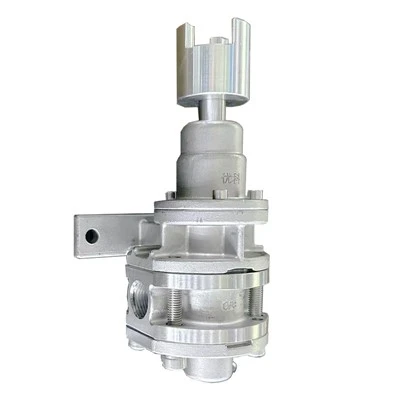
If you’ve ever dealt with fluid transfer systems—whether you’re manufacturing adhesives, working with coatings, or handling industrial chemicals—you’ve probably heard the term “cavitation” thrown around, and if you’ve ever had a rotor pump stop working unexpectedly, or noticed weird noise, reduced flow, or even damage to the pump parts, cavitation is almost always the culprit. Let’s break this down in plain terms, no stuffy engineering jargon that makes your eyes glaze over, especially since we’re rotor pump guys (we’ve been supplying these pumps for years, so we’ve seen cavitation kill way too many runs and waste way too much product).
First, what is cavitation, exactly? Put simply, it’s when low pressure in a fluid drops below the vapor pressure of that fluid, so tiny bubbles (called vapor cavities or voids) form in the liquid. Then, when those bubbles get carried to a higher-pressure part of the pump, they collapse super fast—like, microsecond fast. That collapse sends shock waves through the fluid and the pump parts, and over time, that pitting, noise, and damaged pump internals. For rotor pumps specifically, this is a huge pain because they rely on tight clearances between rotating parts (like gears, rotors, or lobes) to move fluid, so cavitation can mess those clearances up faster than anything else.
Wait, let’s ground this in how a rotor pump actually works, because you can’t understand cavitation without knowing the basics of your pump’s operation. A rotor pump (we sell a ton of these, by the way—check out our high precision rotor gear pump line for all the common industrial uses) uses one or more rotating elements (like two intermeshing gears in a gear pump, or a single rotor with lobes) to create a low-pressure zone at the inlet side of the pump. That low pressure pulls fluid into the pump’s suction chamber, then the rotating parts carry that fluid around the housing to the outlet side, where the pressure is higher, so the fluid is pushed out to your process line.
So the inlet pressure is key here. If the inlet pressure is too low, or if the flow rate of the pump is higher than the amount of fluid that can get to the inlet fast enough, that’s when you get the low pressure that causes cavitation. Let’s give an example that’s super relatable—if you try to drink a milkshake through a super thin straw too fast, you pull so hard that a vacuum forms, and the straw crushes a little, or you suck in air, right? That’s the same idea for a rotor pump: if the suction line is too small, or has a kink, or there’s air leaking into the inlet, or the fluid is too viscous (thick, like glue or syrup), the pump can’t pull enough fluid into the inlet, so pressure drops and those bubbles form.
Now, why is cavitation so bad specifically for rotor pumps, and not, say, a centrifugal pump? Because centrifugal pumps push fluid with an impeller that spins and flings fluid outward, so they have different pressure dynamics, but rotor pumps run at tighter clearances (like, thousandths of an inch tight, to keep fluid from leaking back). When those cavitation bubbles collapse right at those tight clearances, the shock wave doesn’t just damage the fluid—it’s like tiny little hammer blows hitting the gear teeth or rotor lobes over and over. You’ll start to see pitting (small, crater-like dents) on the metal parts, which makes those clearances even bigger, so the pump loses flow and pressure. Eventually, the pump might seize up, or you’ll get metal shavics in your fluid, which ruins whatever you’re making (we’ve seen this happen with our one component polyurethane glue universal pump—the adhesive gets contaminated with metal, which is a total production stop).
Also, cavitation creates a super noticeable symptom: noise. If your rotor pump is running loud—like, way louder than the normal low hum—it’s almost definitely cavitating. Some people think that loud noise is just the pump working hard, but it’s actually the bubbles collapsing, which is that sharp, crackling noise you hear. Another sign is reduced flow rate—if your pump used to move 10 gallons a minute and now it’s only moving 7, even though you haven’t changed your process settings, cavitation is eating away at the pump’s ability to move fluid. And if you open up the pump later, you’ll see those pitted gears or rotors, which is a dead giveaway.
What causes cavitation in rotor pumps, specifically? Let’s list the common ones we see every day as suppliers, so you can spot it before it messes up your process. First, insufficient NPSH (Net Positive Suction Head). NPSH is basically the amount of pressure at the pump inlet above the fluid’s vapor pressure. If NPSH is too low, cavitation happens. For example, if you’re mounting the pump above the fluid tank (suction lift), that creates negative pressure at the inlet—so if the tank is below the pump, that’s better, because gravity pushes fluid into the inlet, increasing NPSH. Second, high fluid viscosity. Thick fluids (like hot water glass, or heavy adhesives) don’t flow as easily, so they can’t get to the inlet fast enough to keep up with the pump’s demand. We’ve actually had customers come to us because their Water Glass High Quality Universal Gear Metering Pump was cavitating, and it turned out they were running it at a flow rate that was way too high for the viscosity of the water glass—they just needed to slow the pump down a little, or go to a larger inlet line. Third, air leaks in the suction line. If there’s a tiny hole in the suction pipe, air gets pulled in, which creates low pressure and vapor bubbles. Fourth, running the pump at too high of a speed. Rotor pumps are sized for a certain flow rate at a certain RPM—if you spin it faster than that, it demands more fluid, so the inlet can’t keep up. Fifth, clogged suction lines or filters. If the inlet is blocked, fluid can’t get in, so pressure drops.
Wait, let’s talk about what doesn’t cause cavitation, just to clear up confusion. It’s not the outlet pressure usually—unless the outlet is totally blocked, which is a different problem (that’s deadheading the pump, which is bad, but not cavitation). Cavitation is almost always an inlet-side issue, because that’s where the low pressure is. That’s a common mistake new operators make—they check the outlet pressure when the pump is cavitating, but the fix is almost always on the suction side.
Now, the good news: cavitation is fixable, and there are ways to prevent it in rotor pumps. Let’s go over the solutions we recommend to our customers, since we work with all kinds of industries that use rotor pumps. First, optimize the NPSH. That means mounting the pump below the fluid tank (using gravity to help feed the inlet), using a larger suction line to reduce flow resistance, and making sure the filter on the inlet isn’t too small or clogged. Second, match the pump to your fluid’s viscosity. If you’re working with a thick fluid like water glass or high-viscosity adhesive, don’t use a pump rated for thin fluids—we make pumps for different viscosities, including our high quality carbon structural steel gear metering pump for furan resin, which is built to handle thicker, more abrasive fluids without cavitating. Third, adjust the pump’s speed. If you’re cavitating at a certain RPM, slow it down—most rotor pumps are variable speed these days, so that’s an easy fix. Fourth, bleed air out of the suction line or pump itself. Some pumps have a vent valve to let trapped air escape, which fixes air leaks that cause low pressure. Fifth, choose the right pump type. For low-flow applications, our external mini gear metering pump is perfect, because it’s sized for smaller flow rates, so it doesn’t demand as much fluid from the inlet, reducing the chance of cavitation.
We’ve had so many customers come to us frustrated because their rotor pump was cavitating, and after a quick check of the inlet line, adjusting the RPM, or picking the right pump for their fluid, the problem is gone. For example, last month, a customer in the adhesives industry was having issues with their one component polyurethane glue universal pump cavitating during high-production runs. They were running the pump at full speed with a 1-inch suction line, and the glue was pretty viscous. We suggested upgrading to a 1.25-inch suction line and slowing the pump by 20%, and they said their flow went back to normal, no more noise, and no more pitting on the gears. That’s the kind of thing we see all the time—cavitation is fixable, you just have to know the root cause.


Let’s also clear up a myth: some people think that cavitation is only a problem for high-pressure pumps, but that’s not true. Even low-pressure rotor pumps can cavitate if the inlet isn’t set up right. For example, if you’re pumping water from a tank that’s 10 feet below the pump, that’s a good NPSH, but if you have a kink in the suction line that adds resistance, that lowers the actual NPSH, leading to cavitation, even though the outlet pressure is only 50 PSI.
Another thing to note: cavitation doesn’t just hurt the pump—it hurts your product too. If bubbles collapse in the fluid, they can cause foaming, uneven flow, or even break down sensitive materials, especially for metering applications where exact flow rates matter (like in the chemical or food industries). If you’re metering adhesive, for example, cavitation can lead to inconsistent bead size, which ruins the finished product. That’s why picking a high-precision rotor pump is important—our high precision rotor gear pump is designed to minimize pressure fluctuations at the inlet, so it’s way less likely to cavitate, even with challenging fluids.
So, to wrap this up, cavitation in rotor pumps is a result of low inlet pressure causing vapor bubbles that collapse violently, damaging pump parts, reducing flow, and ruining your process. It’s a common issue, but it’s totally preventable and fixable with the right setup, pump selection, and minor adjustments to your system.
If you’re dealing with cavitation in your rotor pump—whether you’re pumping polyurethane glue, water glass, furan resin, or any other fluid—and you want to stop the noise, fix the flow, and keep your pump running, we’re here to help. We specialize in supplying high-quality rotor pumps for all kinds of industrial applications, and we can help you pick the right pump, adjust your system, or troubleshoot any cavitation issues you’re having. Just reach out to our team to chat through your needs and find the perfect solution.
References
- Pump Handbook (4th Edition), Karassik, I.J., et al., McGraw-Hill, 2008
- Industrial Fluid Power Handbook, Esposito, A.S., Delmar Cengage Learning, 2010
- Centrifugal and Rotary Pumps: Principles and Applications, Garay, L.N., CRC Press, 2006
- Proceedings of the 2021 International Pump Users Symposium, Hydraulic Institute, 2021
- Fluid Vapor Pressure and Cavitation, Technical Paper TP-15, American Gear Manufacturers Association, 2019