Hey there! As a supplier of chemical pumps, I've been getting a lot of questions lately about the function of a check valve in a chemical pump system. So, I thought I'd take some time to break it down for you all.
First off, let's talk about what a check valve is. A check valve, also known as a non - return valve, is a mechanical device that allows fluid to flow in only one direction. It's a pretty simple concept, but it plays a crucial role in chemical pump systems.
Preventing Backflow
One of the main functions of a check valve in a chemical pump system is to prevent backflow. In a chemical process, the flow of chemicals needs to be carefully controlled. If the fluid were to flow back in the wrong direction, it could cause all sorts of problems. For example, it might contaminate the source of the chemical, or it could damage the pump itself.


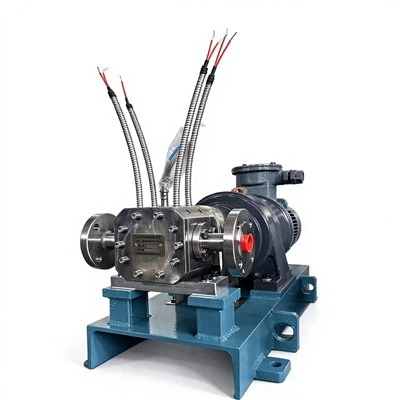
Imagine you're using a Heat Preservation External Gear Metering Pump to transfer a corrosive chemical from one tank to another. Without a check valve, once the pump stops, the chemical could flow back into the pump. This could corrode the internal components of the pump, reducing its lifespan and efficiency. The check valve acts as a one - way gate, ensuring that the chemical only moves in the intended direction.
Maintaining System Pressure
Another important function is maintaining system pressure. In a chemical pump system, pressure is often used to move the fluid through pipes and other components. A check valve helps to keep the pressure stable by preventing the loss of pressure due to backflow.
Let's say you have a Heat Preservation Gear Pump that's creating a certain pressure to push a chemical through a long pipeline. When the pump is running, it builds up pressure in the system. But if there's no check valve, when the pump stops, the pressure in the pipeline could cause the fluid to flow back, and the pressure would drop rapidly. The check valve closes when the flow tries to reverse, holding the pressure in the system. This is especially important in processes where a consistent pressure is required for accurate chemical reactions or proper operation of other equipment.
Protecting Other Components
Check valves also protect other components in the chemical pump system. In a complex system, there are often multiple pumps, valves, and sensors. Backflow can cause damage to these components. For instance, if a backflow occurs, it could send a sudden surge of fluid into a sensitive sensor, causing it to malfunction.
Consider a Petrochemical Gear Metering Pump in a petrochemical plant. The system has many valves and control devices downstream of the pump. A check valve installed near the pump outlet prevents backflow from reaching these components. This way, the other parts of the system can operate smoothly without being affected by reverse flow.
Types of Check Valves in Chemical Pump Systems
There are different types of check valves that can be used in chemical pump systems, and each has its own advantages.
- Swing Check Valves: These are one of the most common types. They have a hinged disc that swings open to allow forward flow and closes by gravity and reverse flow pressure. Swing check valves are simple and reliable, and they can handle a wide range of flow rates.
- Ball Check Valves: Ball check valves use a ball that is pushed aside by forward flow and then seats against an opening to prevent backflow. They are compact and can provide a tight seal, making them suitable for applications where leakage needs to be minimized.
- Lift Check Valves: Lift check valves have a disc that is lifted off its seat by the forward flow and drops back down to close when the flow reverses. They are often used in high - pressure applications.
Selecting the Right Check Valve
When it comes to choosing a check valve for a chemical pump system, there are several factors to consider.
- Chemical Compatibility: The check valve material must be compatible with the chemical being pumped. For example, if you're pumping a highly corrosive acid, you'll need a check valve made of a corrosion - resistant material like stainless steel or a special plastic.
- Flow Rate and Pressure: The size and design of the check valve should be appropriate for the flow rate and pressure of the system. A valve that's too small may cause excessive pressure drop, while a valve that's too large may not close properly.
- Temperature: High - temperature chemicals require check valves that can withstand the heat without deforming or losing their sealing properties.
Installation and Maintenance
Proper installation of the check valve is crucial. It should be installed in the correct orientation to ensure that it functions as intended. Also, regular maintenance is necessary to keep the check valve working properly. This may include inspecting for any signs of wear, cleaning the valve, and replacing any damaged parts.
Conclusion
In conclusion, a check valve is an essential component in a chemical pump system. It prevents backflow, maintains system pressure, and protects other components. As a chemical pump supplier, I've seen firsthand how a well - chosen and properly installed check valve can improve the performance and reliability of a pump system.
If you're in the market for a chemical pump or need advice on selecting the right check valve for your system, don't hesitate to reach out. We're here to help you find the best solutions for your chemical pumping needs.
References
- Perry, R. H., & Green, D. W. (1997). Perry's Chemical Engineers' Handbook. McGraw - Hill.
- Walas, S. M. (1990). Chemical Process Equipment: Selection and Design. Butterworth - Heinemann.