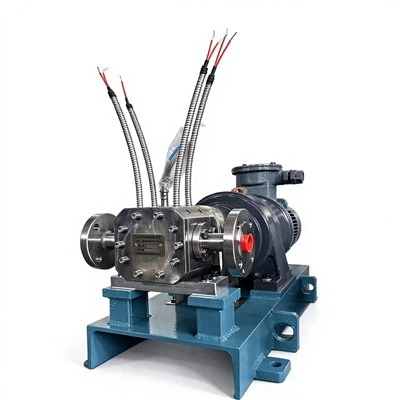
Hey there! As a supplier of Stainless Gear Pumps, I often get asked about the shaft material of these pumps. It's a crucial part of the pump, and understanding its material can help you make a better choice when it comes to purchasing. So, let's dive right in and explore what the shaft material of a stainless gear pump is all about.
First off, the shaft in a stainless gear pump plays a vital role. It's responsible for transferring power from the motor to the gears, which then pump the fluid. This means it has to withstand a fair amount of stress, including torque, bending, and sometimes even corrosion, depending on the fluid being pumped.
One of the most common materials used for the shaft of a stainless gear pump is stainless steel. Yeah, you guessed it right! Stainless steel is a popular choice because it offers a great combination of strength, durability, and corrosion resistance. There are different grades of stainless steel, and the choice depends on the specific requirements of the pump.
For instance, 304 stainless steel is a widely used grade. It's relatively affordable and has good corrosion resistance in many common environments. It can handle a variety of fluids, from water - based solutions to mild chemicals. If your application involves pumping clean water, light oils, or some non - aggressive chemical solutions, a shaft made of 304 stainless steel would likely do the job just fine.
However, if you're dealing with more corrosive fluids, like acids or saltwater, you might want to consider 316 stainless steel. This grade contains molybdenum, which enhances its corrosion resistance, especially against chloride ions. So, in marine applications or when pumping certain acidic chemicals, a 316 stainless steel shaft is a much better option.
Another material that can be used for the shaft is carbon steel. Carbon steel is known for its high strength. It can handle heavy loads and high - torque applications. But the downside is that it's not as corrosion - resistant as stainless steel. So, if you use a carbon steel shaft, it usually needs some form of coating or treatment to protect it from corrosion. For example, it can be painted, galvanized, or have a special anti - corrosion coating applied. This type of shaft is often used in industrial settings where the fluid being pumped is not corrosive, and the pump needs to handle high - power requirements.
In some cases, depending on the specific application, alloy steels can also be used. Alloy steels are made by adding other elements to carbon steel to enhance its properties. For example, they can have better wear resistance, toughness, or heat resistance. These shafts are typically used in more demanding applications, such as high - temperature or high - pressure environments.
Now, let's talk about how the choice of shaft material affects the performance of the stainless gear pump. The right shaft material ensures smooth operation. If the shaft is made of a material that can't withstand the stress, it might bend or break, which will cause the pump to malfunction. Corrosion - resistant materials prevent the shaft from deteriorating over time, which extends the lifespan of the pump.
Let's say you're in the market for a stainless gear pump for a specific application. You need to think about the type of fluid you'll be pumping, the operating conditions (like temperature and pressure), and the power requirements. If you're looking for a pump for metering applications, you might be interested in our Servo Gear Metering Pump. It's designed to provide accurate metering, and the choice of shaft material is carefully considered to ensure reliable performance.
For applications involving tar or thick, viscous fluids, our Tar Stainless Gear Metering Pump is a great option. The shaft material in this pump is selected to handle the high - viscosity fluid and the associated stress.


If you're working with polyurethane, our Polyurethane Gear Metering Pump is worth checking out. The shaft is engineered to work well with the specific properties of polyurethane, ensuring efficient and precise pumping.
In conclusion, the shaft material of a stainless gear pump is a critical factor that affects its performance, durability, and suitability for different applications. Whether it's stainless steel, carbon steel, or an alloy steel, each material has its own advantages and is chosen based on the specific needs of the pump.
If you're in the process of purchasing a stainless gear pump or have any questions about the shaft material or our products, don't hesitate to reach out. We're here to help you make the right choice for your application.
References
- ASM Handbook, Volume 1: Properties and Selection: Irons, Steels, and High - Performance Alloys
- Pumps and Pumping Handbook, by I. J. Karassik, W. C. Krutzsch, W. H. Fraser, and J. P. Messina