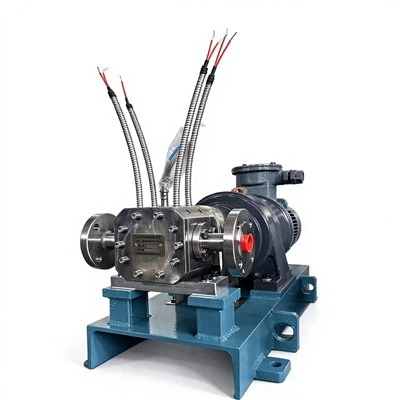
What is the pressure - flow relationship of a motor gear pump?
As a dedicated supplier of motor gear pumps, I've witnessed firsthand the crucial role these pumps play in a wide array of industrial applications. One of the most fundamental aspects to understand about motor gear pumps is the relationship between pressure and flow. This relationship not only dictates the pump's performance but also influences its selection for specific tasks.
Understanding the Basics of Motor Gear Pumps
Before delving into the pressure - flow relationship, let's briefly review how motor gear pumps work. A motor gear pump consists of two meshing gears, typically a driving gear and a driven gear, enclosed in a housing. As the gears rotate, they create chambers that trap fluid at the inlet side of the pump. These chambers then move the fluid around the outside of the gears to the outlet side, where the fluid is discharged.
The simplicity of this design makes motor gear pumps reliable, efficient, and suitable for handling a variety of fluids, including oils, fuels, and viscous liquids. However, the performance of these pumps is highly dependent on the interaction between pressure and flow.
The Pressure - Flow Curve
The pressure - flow relationship of a motor gear pump is typically represented by a pressure - flow curve. This curve shows how the flow rate of the pump changes as the pressure against which it is pumping varies.
At zero pressure (also known as the free - delivery condition), the pump can deliver its maximum flow rate. This is because there is no resistance to the flow of fluid, and the pump can operate at its highest efficiency. As the pressure increases, the flow rate gradually decreases. This is due to several factors, including internal leakage within the pump and the power limitations of the motor.
Internal leakage occurs because the gears and the housing of the pump are not perfectly sealed. As the pressure increases, more fluid leaks back from the outlet side to the inlet side of the pump, reducing the net flow rate. Additionally, as the pressure rises, the motor has to work harder to turn the gears, and eventually, it may reach its power limit, further reducing the flow rate.
Factors Affecting the Pressure - Flow Relationship
Several factors can affect the pressure - flow relationship of a motor gear pump:
-
Viscosity of the Fluid: The viscosity of the fluid being pumped has a significant impact on the pump's performance. Higher - viscosity fluids are more resistant to flow, which means that the pump has to work harder to move them. As a result, the flow rate of the pump decreases more rapidly with increasing pressure when pumping high - viscosity fluids compared to low - viscosity fluids.
-
Pump Size and Design: The size and design of the pump also play a role in the pressure - flow relationship. Larger pumps generally have a higher maximum flow rate and can handle higher pressures. Additionally, the design of the gears and the housing can affect the internal leakage of the pump, which in turn affects the pressure - flow curve.
-
Motor Power: The power of the motor driving the pump is another important factor. A more powerful motor can maintain a higher flow rate at higher pressures compared to a less powerful motor. However, it's important to note that increasing the motor power also increases the cost and energy consumption of the pump.
Applications and the Pressure - Flow Relationship
Understanding the pressure - flow relationship is essential for selecting the right motor gear pump for a specific application. For example, in hydraulic systems, where high pressures are required to operate cylinders and valves, a pump with a high - pressure rating and a relatively flat pressure - flow curve is often preferred. This ensures that the pump can maintain a consistent flow rate even as the pressure varies.
On the other hand, in applications where a high flow rate is more important than high pressure, such as in some lubrication systems, a pump with a high maximum flow rate at low pressures may be more suitable.
Our Product Range and the Pressure - Flow Relationship
As a supplier of motor gear pumps, we offer a wide range of products to meet different pressure and flow requirements. For instance, our LM481 Special Gear Pump is designed for applications that require a balance between high pressure and moderate flow rate. It has been engineered to minimize internal leakage and provide a stable pressure - flow curve over a wide range of operating conditions.

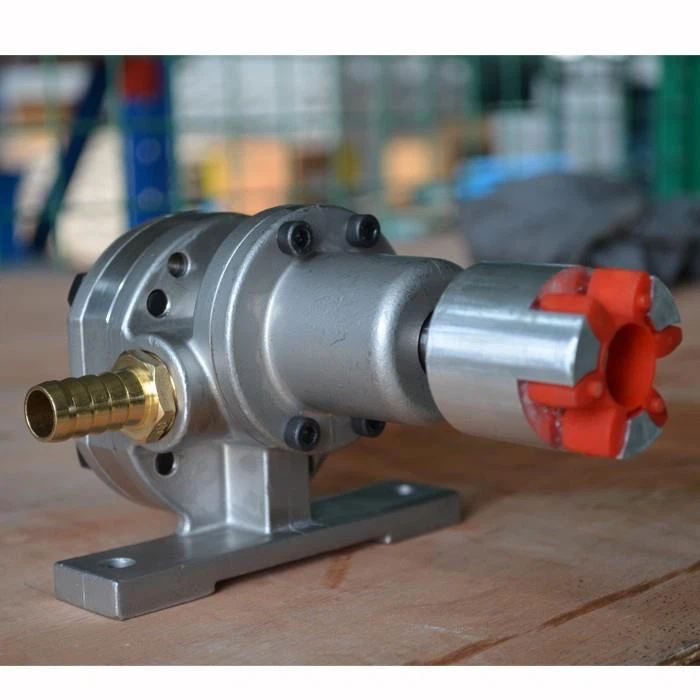
Our Electric Gear Pump is another popular choice. It is powered by an electric motor, which offers precise control over the pump's speed and, consequently, the flow rate. This makes it suitable for applications where accurate flow control is required, such as in chemical dosing systems.
For applications involving the pumping of viscous fluids, such as epoxy resin, our Epoxy Resin Gear Metering Extrusion Pump is a great option. It is specifically designed to handle high - viscosity fluids and can maintain a consistent flow rate even at high pressures.
Conclusion and Call to Action
In conclusion, the pressure - flow relationship of a motor gear pump is a complex but crucial aspect of its performance. By understanding this relationship, you can select the right pump for your specific application, ensuring optimal efficiency and reliability.
If you're in the market for a motor gear pump and need assistance in choosing the right product based on your pressure and flow requirements, we're here to help. Our team of experts has extensive knowledge of motor gear pumps and can provide you with personalized advice. Contact us today to start a discussion about your pumping needs and explore how our products can meet them.
References
- Karassik, I. J., Messina, R. S., Cooper, P. & Heald, C. C. (2008). Pump Handbook. McGraw - Hill.
- Stepanoff, A. J. (1957). Centrifugal and Axial Flow Pumps: Theory, Design, and Application. Wiley.
- Gulich, J. F. (2010). Centrifugal Pumps. Springer.