


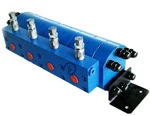
Grinding Agent Pump
Why choose us
Company strength
Our company covers an area of 26,000 square meters, with 5 CNC machining centers; 6 CNC lathes; 6 CNC milling machines; 5 CNC grinders; and 30 other CNC equipment.
Professional team
We have an excellent and experienced workforce capable of providing customers with high-quality products, professional technical consultation and comprehensive services.
Our certifications
Now it has more than 20 patents, passed ISO9000 certification, and its products have passed CE certification.
Advanced equipment
Our company has advanced production and testing equipment to provide you with the best products.
What is Grinding Agent Pump
Grinding agent pump might seem like any other pump. But oh, it's so much more! This savvy device isn't just pumping water; it grinds, churns, and effortlessly deals with solid wastes. Picture a dedicated kitchen blender but for your wastewater. With this pump, solid waste doesn't stand a chance!


Universal gear pump with the good fluid compatibility, is widely used in different industries,
And which shows excellent preformance except acidic, strong alkaline, and chloride fluid.
Specially for the isocyanate, polyether polyols, two components A and B, epoxy resin or sodium silicate
Benefits of Grinding Agent Pump
Flow rate
The flow rate of a Grinding Agent Pump is the amount of fluid that it can deliver per unit of time. This is typically measured in milliliters per minute (mL/min) or gallons per hour (GPH).
Accuracy
The accuracy of a Grinding Agent Pump is how closely it can deliver the desired flow rate. This is typically measured as a percentage of the desired flow rate. For example, a dosing pump with an accuracy of 1% can deliver a flow rate that is within 1% of the desired flow rate.
Repeatability
The repeatability of a Grinding Agent Pump is how consistently it can deliver the desired flow rate. This is typically measured as the standard deviation of the flow rate. For example, a dosing pump with a repeatability of 0.1% can deliver a flow rate that is within 0.1% of the desired flow rate, 95% of the time.
Durability
The durability of a Grinding Agent Pump is how well it can withstand wear and tear. This is important for Grinding Agent Pump that are used in harsh environments.
Application of Grinding Agent Pump
Chemical catalysts are additives needed to keep chemicals in manufacturing plants from losing their effectiveness. Grinding Agent Pump inject these catalysts with precision at the proper pressures and temperatures to aid in chemical preservation. Also, creating disinfecting products such as bleach for industrial and household use would also not be possible without the aid of Grinding Agent Pump providing the accurate amount of ingredients and additives for a safe product.
Grinding Agent Pump are used for dosing chemicals in water treatment applications. Water treatments, such as disinfection, PH adjustment and metering of polymers for coagulation are commonly performed by Grinding Agent Pump. Grinding Agent Pump dose chemicals like chlorine to kill pathogens or help the water maintain the proper PH level. Without Grinding Agent Pump for water treatment, the health risks associated with untreated drinking water would be devastating.
Used for the accurate dosing of ingredients such as flavors, colorants and preservatives, the food industry would not resemble what it has come to be without Grinding Agent Pump. Most food products would be less appetizing taste wise and aesthetically less attractive without the help of Grinding Agent Pump. Grinding Agent Pump also provide accurate dosing of vitamins and food additives that make food more nutritious and safer to eat.
Grinding Agent Pump are regularly used for precise dosing of ingredients in pharmaceutical manufacturing processes. The production of intravenous drugs and other medical treatments, as we know them today, would not be properly balanced and have potential serious safety consequences without the aid of Grinding Agent Pump. Sterilizing agents that allow hospitals to be sanitary, hygienic spaces also would not be able to be created without Grinding Agent Pump.
Grinding Agent Pump are essential to a farm's crop quality. They dispense water, fertilizers and pesticides which ensure the best possible plant growth and crop yield, while supporting soil PH. The quality of our produce would be massively affected if Grinding Agent Pump weren't used to deliver exactly what crops need, when they need it. Our food supply would also be negatively affected. Greenhouses and hydroponics growing facilities also use Grinding Agent Pump to precisely inject or dose fluids (water, fertilizer, etc.) on a system's flowrate.
Grinding Agent Pump are responsible for precise injection of chemicals like corrosion inhibitors, scale inhibitors and biocides into oil and gas wells to prevent issues such as corrosion and fouling. The efficiency and quality of oil and gas would be subpar and potentially not be usable at all (in some cases) without Grinding Agent Pump precisely adding in the necessary additives. Grinding Agent Pump can be used in all phases of oil production including production, proce
Types of Grinding Agent Pump

Cement Grinding Aids Metering Pump
He Special Metering Pump for Cement Grinding Aids is an advanced device designed to deliver high precision and stability in the cement grinding process. The pump is engineered to deliver consistent and accurate dosage of cement grinding aids, while also ensuring ease of operation.Built with advanced technology, the water-based metering pump is designed with high accuracy and stability to guarantee precise dosage in the grinding process. The pump components are made of high-quality materials, providing durability and long-lasting performance.

Cement Grinding Aid Measurement Pump
Cement Grinding Aid Measurement Pump. Designed specifically for measuring and dispensing cement grinding aid additives, this pump offers unparalleled accuracy and stability, as well as exceptional ease of operation.One of the key features of our Cement Grinding Aid Measurement Pump is its high precision measurements. The pump is calibrated to an extremely high degree of accuracy, ensuring that the exact amount of grinding aid is dispensed every time. This means that our customers can rely on consistent results, regardless of the application or environment.

Grinding Agent Metering Pump
Grinding Agent Metering Pump is designed with simplicity and efficiency in mind, making use of a gear metering pump structure that is not sensitive to particle impurities. The single-directional valve is equipped with a specialized cleaning slot that can rotate in both directions and effectively clears most impurities for maximum pump integrity.With its robust and reliable design, our cement grinding aid special metering pump can help ensure consistent and accurate dispensing of our cement grinding aid products, providing our customers with superior quality and efficiency.
Grinding Agent Aid Metering Pump
Grinding Agent Aid Metering Pump, which is specially designed to accurately and efficiently measure and dispense grinding aids for cement production.One of the key features of our metering pump is its simple and uniform gear structure. This design allows the pump to operate with minimal vibrations and noise, ensuring a smooth and consistent flow of the cement grinding aid. The pump also boasts a continuous, pulse-free delivery system, guaranteeing precise and consistent measurement of the grinding aid.
Components of Grinding Agent Pump
Driver
The pump is driven by an AC constant speed motor. Variable speed, pneumatic and hydraulic drivers are also utilized.
Liquid End
The liquid end design and materials of construction are determined by the service conditions, and the nature of the fluid to be handled. Temperature, flow rate, fluid viscosity, corrosiveness and other factors are considered.
Driver Mechanism
The drive mechanism translates the rotary motion of the driver into reciprocating movement. Industrial duty pumps will submerge this portion of the pump in an oil bath to assure reliability during continuous operation.
Flow Adjustments
Pump flow rate is adjustable by varying stroke length, effective stroke length, or stroking speed. Most metering pumps are supplied with a micrometer screw adjustment similar to the one shown here. The micrometer can also be replaced by an electronic or pneumatic actuator to adjust pump flow rate in response to process signal.
How to Choose Grinding Agent Pump
Flow rate
This is one of the most important things to consider. Knowing your expected or desired flow rate is going to be a crucial step in choosing the proper equipment. A good rule of thumb is to make your maximum expected flow rate no more than 90% of the pump's capacity. This way you will have room for small increases if needed.
Operating environment
Here is another one of the first variables you need to keep i mind. Where will the equipment be operating? Is the metering pump going to be outside in direct sunlight? Will it be exposed to below freezing temperatures? This may sound obvious, but it can be overlooked very easily. The operating environment will most definitely impact the performance of the pump. If the pump will be operating in cold temperatures for example, you must make sure the fluid that is being pumped will not freeze at that specific temperature.
Fluid composition
The composition of your pumping fluid is also important when deciding on your grinding agent pump type and size. This type of pump can be designed to handle a very wide variety of fluid viscosities, but certain things will need to be changed as the fluids get thicker or more viscous. For example, thicker ones will require the use of special fluid ends. Extremely thick liquids that contain solids may even require special diaphragms in order to operate efficiently.
Pump construction materials
Similar to the rest of your equipment involved in fluid transfer, the parts that make up these grinding agent pump must be able to withstand the conditions they will be exposed to. We are not referring to environmental conditions in this case, but more so the conditions created by the pumping fluid. Many industries frequently handle corrosive chemicals or abrasive materials that require more heavy duty pump components. If you are dealing with this type of fluid, you many need to explore parts made of something like stainless steel.
Let esp help you make the right decision
As you can see, the grinding agent pump operates on a fairly simple concept, but there are many factors that influence the style and size of pump that is needed. That's where we come in! The team of experts at engineered systems & products is just a call away. We will make sure to answer all of your questions and design a grinding agent pump system that is optimized for your specific scenario. Please contact us today so we can help you get started with your next project.
Process Of Grinding Agent Pump
Liquid Chamber
Grinding Agent Pump have a liquid chamber where the fluid to be dosed is contained. This chamber is typically sealed and isolated from the external environment to prevent leaks.
Displacement Mechanism
Grinding Agent Pump use various displacement mechanisms, depending on their type. Some common mechanisms include diaphragms, pistons, peristaltic rollers, or gear mechanisms. The choice of mechanism affects the precision and suitability of the pump for specific applications.
Valves
Most Grinding Agent Pump incorporate one-way check valves (inlet and outlet valves) to ensure that the flow of liquid is unidirectional. These valves prevent backflow and maintain the integrity of the dosing process.
Drive Mechanism
A motor or drive mechanism powers the displacement mechanism. The motor's movement or rotation is precisely controlled, ensuring that the pump operates at the desired flow rate and dosage accuracy.
Control System
Grinding Agent Pump often have a control system that allows users to set and adjust the desired flow rate. This control can be manual or automated, depending on the pump's sophistication and the application's requirements.
Pressure Relief or Bypass
Some Grinding Agent Pump incorporate a pressure relief or bypass mechanism to protect against over-pressurization. If the system encounters higher pressure than desired, excess liquid can be directed back to the liquid chamber or recirculated.
How to Maintain Grinding Agent Pump
Regular inspection is key
Routine inspections are the cornerstone of grinding agent pump maintenance. Regularly check for any signs of leaks, unusual noises, or vibrations. Visual inspections can reveal loose connections, damaged hoses, or worn-out components. By identifying issues early on, you can address them promptly, preventing more significant problems down the line.
Monitor fluid levels and quality
Maintaining the proper fluid levels is crucial for grinding agent pump performance. Check hydraulic fluid levels regularly and top up as needed. Additionally, monitor the quality of the hydraulic fluid, ensuring that it meets the manufacturer's specifications. Contaminated or degraded fluid can lead to pump inefficiency and premature wear, so regular fluid analysis and replacement are essential.
Temperature control
Grinding agent pump generate heat during operation. Excessive heat can accelerate wear and reduce the pump's overall lifespan. Install temperature gauges and regularly monitor the pump's operating temperature. If temperatures are consistently high, consider using heat exchangers or coolers to maintain optimal operating conditions.
Filter replacement and cleaning
Hydraulic fluid filters play a crucial role in preventing contaminants from entering the system. Regularly inspect and replace filters according to the manufacturer's recommendations. Clogged or dirty filters can lead to increased pressure differentials, reducing pump efficiency. Regular filter maintenance ensures a clean and efficient hydraulic system.
Seal and gasket checks
Check the seals and gaskets of the grinding agent pump for signs of wear, damage, or leaks. Faulty seals can lead to fluid leaks, compromising the pump's efficiency and causing potential safety hazards. Replace any damaged seals or gaskets promptly to maintain the pump's integrity and prevent fluid contamination.
Tighten loose connections
Vibrations and fluctuations in pressure can cause connections to loosen over time. Regularly inspect all connections, including hoses, fittings, and bolts. Tighten any loose connections to prevent leaks and ensure the pump operates smoothly.
Our Factory
Jinan Hai Rui Te Mechanical CO., LTD was founded in 2005. Our talented and experienced staff can provide products with good quality, professional technical consult, and perfect service to our clients. "Keep improving " is a principle we always insist. More than sixty percent of the company staff have bachelor or higher university degrees. Now We have more than 20 patents, passed ISO9000 certification, and our products have passed CE certification. As a professinal fluid service provider, we only manufacture and sell quality products. Clients can rest assured our products and services will solve all their fluid metering problems efficiently and economically.
Certificate


