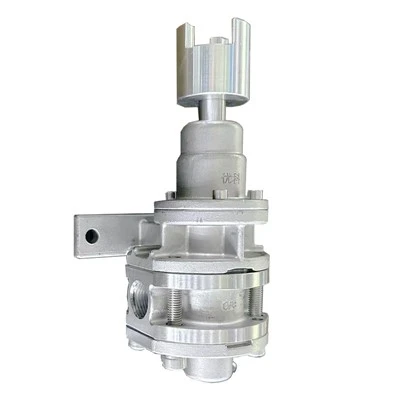
The rotational speed of a pump plays a crucial role in determining the shear rate of the fluid it processes. As a reputable supplier of Gear Metering Pumps, we have witnessed firsthand the intricate relationship between these two factors and their impact on various industrial applications. In this blog post, we will delve into the science behind the influence of the pump's rotational speed on the fluid's shear rate, exploring how this relationship affects performance, product quality, and efficiency.
Understanding Shear Rate
Before we discuss the impact of the pump's rotational speed on the shear rate, it is essential to understand what shear rate is. Shear rate refers to the rate at which a fluid is deformed or "sheared" when a force is applied. In the context of a pump, this force is generated by the movement of the pump's gears, which causes the fluid to flow and experience shear stress. The shear rate is typically measured in reciprocal seconds (s⁻¹) and is a critical parameter in many fluid - related processes.
The shear rate can have a significant impact on the physical and chemical properties of the fluid. For example, in polymer processing, high shear rates can break down polymer chains, altering the viscosity and mechanical properties of the final product. In food and beverage applications, excessive shear can damage sensitive ingredients, affecting taste, texture, and overall quality.
The Relationship between Pump Rotational Speed and Shear Rate
The rotational speed of a gear metering pump is directly related to the shear rate of the fluid. As the pump's rotational speed increases, the gears move faster, causing the fluid to be sheared at a higher rate. This relationship can be explained by the basic principles of fluid mechanics.
The shear rate in a gear metering pump can be approximated using the following formula: $\dot{\gamma}=\frac{V}{h}$, where $\dot{\gamma}$ is the shear rate, $V$ is the velocity of the fluid between the gears, and $h$ is the gap between the gears. The velocity of the fluid is directly proportional to the rotational speed of the pump. As the pump rotates faster, the linear velocity of the gear teeth increases, which in turn increases the velocity of the fluid between the gears.
Mathematically, if we consider a gear with a radius $r$ and a rotational speed $N$ (in revolutions per minute, RPM), the linear velocity $V$ of the gear teeth is given by $V = 2\pi r\frac{N}{60}$. Substituting this into the shear - rate formula, we can see that as $N$ increases, $V$ increases, and so does the shear rate $\dot{\gamma}$.


Impact on Fluid Viscosity
One of the most significant impacts of the pump's rotational speed on the shear rate is its effect on fluid viscosity. Many fluids, especially non - Newtonian fluids, exhibit a change in viscosity with respect to shear rate. Non - Newtonian fluids can be classified into several types, such as shear - thinning, shear - thickening, and Bingham plastics.
Shear - thinning fluids, also known as pseudoplastic fluids, are the most common type in industrial applications. For shear - thinning fluids, as the shear rate increases (due to an increase in pump rotational speed), the viscosity of the fluid decreases. This can be advantageous in some applications, as it allows the fluid to flow more easily through the pump and the pipeline. For example, in the application of high precision stainless steel hot melt adhesive gear metering pump, the hot melt adhesive, which is often a shear - thinning fluid, can be pumped more efficiently at higher rotational speeds due to the reduced viscosity.
On the other hand, shear - thickening fluids, also called dilatant fluids, increase in viscosity as the shear rate increases. This can pose challenges in pumping operations, as higher rotational speeds may lead to increased resistance and require more energy to pump the fluid.
Impact on Product Quality
The pump's rotational speed and the resulting shear rate can have a profound impact on product quality. In the case of Epoxy Resin Gear Metering Extrusion Pump, epoxy resin is a sensitive material. High shear rates can cause premature curing of the epoxy, leading to uneven distribution of the resin and affecting the mechanical properties of the final product.
In food processing, when using a pump to handle delicate food products, such as fruit purees or dairy products, excessive shear rates can damage the cellular structure of the ingredients. This can result in a loss of flavor, texture, and nutritional value. For instance, in the production of ice cream, high shear rates can cause the fat globules to coalesce, leading to a grainy texture.
Impact on Pump Efficiency
The relationship between pump rotational speed and shear rate also affects pump efficiency. At low rotational speeds, the shear rate is relatively low, and the fluid may have a higher viscosity. This can result in increased frictional losses within the pump, reducing the overall efficiency.
As the rotational speed increases, the shear rate increases, and the viscosity of shear - thinning fluids decreases. This can lead to a reduction in frictional losses and an increase in pump efficiency. However, if the rotational speed is too high, the increased shear rate can cause cavitation and other flow instabilities, which can again reduce pump efficiency and potentially damage the pump.
Applications and Considerations
In different industrial applications, the impact of pump rotational speed on shear rate needs to be carefully considered.
Polymer Processing
In polymer processing, the control of shear rate is crucial for achieving the desired properties of the final product. For example, in the production of plastic films, a precise control of the shear rate during extrusion is necessary to ensure uniform thickness and mechanical properties. A Polyether Polyols Metering Pump can be used to meter polyether polyols, a key component in the production of polyurethane. By adjusting the pump's rotational speed, the shear rate can be optimized to prevent polymer degradation and ensure high - quality products.
Chemical Manufacturing
In chemical manufacturing, many chemical reactions are sensitive to shear rate. Some reactions require a certain level of shear to ensure proper mixing and reaction kinetics, while others need to be carried out at low shear rates to avoid side reactions. For example, in the production of emulsions, the shear rate during the emulsification process determines the droplet size and stability of the emulsion.
Conclusion
The rotational speed of a gear metering pump has a significant impact on the shear rate of the fluid it processes. This relationship affects fluid viscosity, product quality, and pump efficiency. As a Gear Metering Pump supplier, we understand the importance of providing pumps that can operate at the optimal rotational speed to achieve the desired shear rate for different applications.
When selecting a gear metering pump for your specific application, it is essential to consider the fluid properties, the required shear rate, and the desired product quality. Our team of experts can provide you with professional advice and customized solutions to meet your needs. If you are interested in learning more about our products or have any questions regarding the impact of pump rotational speed on shear rate, please feel free to contact us for procurement and further discussions.
References
- Bird, R. B., Stewart, W. E., & Lightfoot, E. N. (2007). Transport Phenomena. John Wiley & Sons.
- Middleman, S. (1995). Fundamentals of Polymer Processing. McGraw - Hill.
- Cheremisinoff, N. P. (1986). Pump Handbook. Butterworth - Heinemann.